
Wedding planning comes with a lot of excitement…
And also a surprising number of awkward questions.
One of the biggest?
“Who is invited to what?”
Who comes to the engagement party?
Who gets invited to the bridal shower?
Do coworkers come to the rehearsal dinner?
Do plus-ones go to everything?
What about kids?
If you’ve ever felt unsure — or worried about offending someone — you’re not alone. Guest lists aren’t just about numbers. They’re about relationships, expectations, and emotions.
This guide will walk you through every major wedding event, explain who is traditionally invited, what’s flexible, and how to make choices that feel fair and sane.
No guilt. No outdated rules. Just clarity.
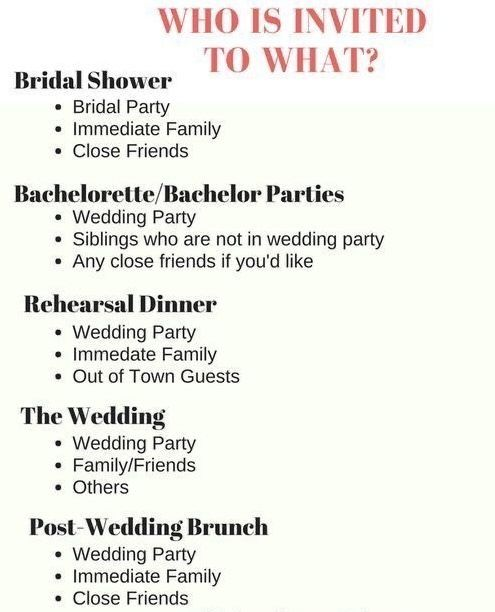
First: One Important Rule That Changes Everything
Before we break down events, here’s the most important thing to remember:
No one is automatically entitled to every wedding event.
Each event serves a different purpose.
Each has a different guest list.
And that’s completely okay.
When you understand why each event exists, the guest list decisions get much easier.
The Engagement Party
What It Is
A celebration of your engagement — often casual, sometimes formal, sometimes a surprise.
Who Is Traditionally Invited
- Immediate family
- Close friends
- Members of the wedding party
- Sometimes extended family
The Golden Rule
👉 Anyone invited to the engagement party should also be invited to the wedding.
This is one of the few guest list rules that really matters.
Who Is Not Usually Invited
- Distant acquaintances
- People you don’t plan to invite to the wedding
- Obligatory invites out of politeness
💡 Tip: Engagement parties can be small. They don’t need to include everyone.
The Bridal Shower (or Wedding Shower)
What It Is
A gift-giving celebration, usually hosted by friends or family.
Who Is Traditionally Invited
- Bridesmaids
- Close female friends
- Close family members
- Sometimes coworkers
- Anyone invited must also be invited to the wedding
Important Etiquette Note
Because gifts are involved:
👉 Never invite someone to a shower if they are not invited to the wedding.
That’s considered poor etiquette and can cause hurt feelings.
Can Men Be Invited?
Absolutely. Co-ed showers (sometimes called wedding showers) are increasingly common.
The Bachelor & Bachelorette Parties
What They Are
Celebrations hosted by the wedding party — often trips or nights out.
Who Is Invited
- Bridesmaids / groomsmen
- Close friends
- Sometimes close siblings
- Occasionally friends not in the wedding party
Who Is Not Obligated
- Every wedding guest
- Family members you’re not close with
- Anyone who would feel uncomfortable attending
💡 Key thing to remember: These events are optional and not an obligation.
The Rehearsal Dinner
This is where confusion really starts.
What It Is
A dinner held after the ceremony rehearsal, usually the night before the wedding.
Who Is Traditionally Invited
- Couple
- Wedding party
- Immediate family
- Officiant (and their partner)
- Sometimes close family traveling from far away
Common Modern Additions
- Parents
- Siblings
- Grandparents
- Plus-ones of the wedding party
Who Is Usually Not Invited
- All wedding guests
- Extended friend groups
- Coworkers
💡 Rule of thumb: If someone is required at the rehearsal, they should be invited to the dinner.
Welcome Party (Optional, Often for Destination Weddings)
What It Is
A casual gathering before the wedding — often replacing or expanding the rehearsal dinner.
Who Is Invited
- Out-of-town guests
- Wedding party
- Immediate family
- Sometimes all wedding guests
This event is flexible and entirely optional.
💡 Tip: If it’s open to everyone, keep it casual — drinks, snacks, mingling.
The Wedding Ceremony
Who Is Invited
Anyone on your official wedding guest list.
Can You Invite Someone to the Reception but Not the Ceremony?
Technically yes — but it’s uncommon and can feel awkward unless:
- The ceremony is very small
- The reception is much larger
- Cultural traditions support it
If you do this, communicate clearly.
The Wedding Reception
Who Is Invited
- All ceremony guests
- Plus-ones (if offered)
- Children (if included — more on that below)
Important Rule
👉 Anyone invited to the ceremony must be invited to the reception.
The reverse is not always true — but tread carefully.
Plus-Ones: Who Gets One?
This is one of the most sensitive topics in wedding planning.
Generally, Plus-Ones Are Given To:
- Married couples
- Engaged couples
- Long-term partners
- Guests traveling alone
- Members of the wedding party
Who Might Not Get a Plus-One
- Single guests with no serious partner
- Casual dating situations
- Coworkers or acquaintances
💡 Key principle: Be consistent. Inconsistency causes hurt feelings.
Kids at Weddings: Who Is Invited?
There’s no right or wrong choice — only clarity.
Kid-Friendly Weddings
Children are included on the invitation by name.
Adults-Only Weddings
Children are not listed on the invitation.
💡 Important: Never assume guests will “just know.” Spell it out gently.
Out-of-Town Guests
Out-of-town guests often get extra consideration — but not extra event invites by default.
They Are Typically Invited To:
- Wedding
- Reception
- Sometimes a welcome party
They are not automatically invited to:
- Rehearsal dinner
- Bachelor/bachelorette events
- Showers
Coworkers: Where Do They Fit?
This depends on closeness and workplace culture.
Common Scenarios
- Close coworkers → invited to the wedding
- Boss → optional, but be consistent
- Entire department → usually all or nothing
💡 Avoid: Inviting some coworkers to events but excluding others without clear reason.
Family Obligations (The Hard Part)
Families often have expectations — spoken or unspoken.
A Helpful Question to Ask Yourself
“Would I want this person at an intimate moment of my day?”
If the answer is no, it’s okay to draw boundaries.
Events People Often Think They’re Invited To (But Aren’t)
This causes a lot of anxiety, so let’s be clear.
People are not automatically invited to:
- Engagement parties
- Bridal showers
- Bachelor/bachelorette trips
- Rehearsal dinners
- Post-wedding brunches
Unless they are explicitly invited.
Post-Wedding Brunch
What It Is
A casual gathering the day after the wedding.
Who Is Usually Invited
- Immediate family
- Wedding party
- Out-of-town guests
- Anyone still in town
This event is relaxed and flexible.
How to Handle Hurt Feelings (Gracefully)
Despite best efforts, feelings can still get hurt.
Here’s what helps:
- Be consistent
- Communicate clearly
- Avoid over-explaining
- Stay kind but firm
You don’t need to justify every decision.
A Simple Guest List Rule That Saves Stress
If you’re unsure whether someone should be invited to an event, ask:
- Does this event involve gifts?
- Is attendance required for the wedding itself?
- Would it feel strange if they weren’t there?
Your answers will guide you.
Final Thoughts: You’re Allowed to Set Boundaries
Wedding planning isn’t about pleasing everyone.
It’s about celebrating a major life moment in a way that feels:
- Comfortable
- Respectful
- True to you
When you understand who is invited to what, decisions feel less emotional and more intentional.
And that makes the entire planning process smoother.