
Planning your wedding guest list can feel more emotional than choosing the venue or outfit. One extra name can affect the budget, seating, catering, and even family dynamics. The good news? With the right steps, this process can feel calm and controlled instead of overwhelming.
This guide walks you through clear, practical steps to organize your wedding guest list without tension. You’ll learn how to set limits, handle family pressure, and stay organized from start to finish.
Start With Your Vision and Venue Capacity

Before writing down names, step back and look at the bigger picture.
Ask yourself:
- Is this a small, intimate wedding or a large celebration?
- What is the maximum capacity of your venue?
- Are you planning one event or multiple functions?
Your venue number is your hard boundary. Write it down. This number guides every decision and keeps expectations realistic.
Once you know your limit, split it roughly:
- Couple’s friends
- Close family
- Extended family
- Work or social circles
This keeps the list balanced from the start.
Create a Master Guest List Together
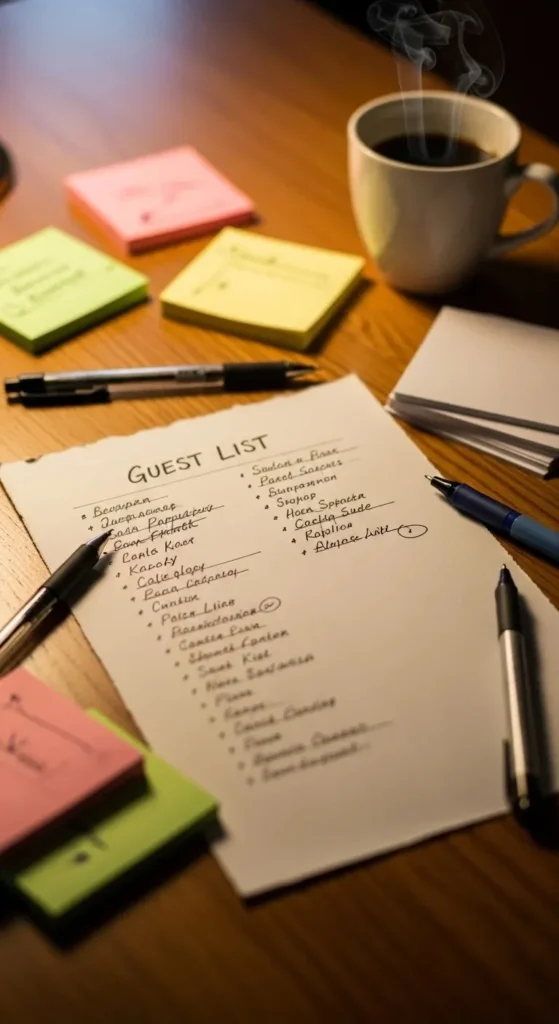
Sit down together and write every possible name without editing. No judgment yet.
Use:
- A notebook
- Google Sheets
- Notes app
Include:
- Full names
- Relationship
- Which side they belong to
This brain dump helps you see the full picture. Many couples feel relief just getting names out of their heads and onto paper.
Divide Guests Into Clear Priority Groups

Now comes the sorting.
Create simple tiers:
- Must-have (immediate family, closest friends)
- Would-like (extended family, good friends)
- Optional (plus-ones, distant connections)
This method helps when numbers get tight. If cuts are needed, you know where to look without emotional panic.
Tip: Be honest. If you haven’t spoken in years, that’s a sign.
Set Fair Rules for Plus-Ones and Kids

Clear rules prevent confusion later.
Decide early:
- Are plus-ones allowed for all, or only married/long-term partners?
- Is the wedding adults-only, kids-only for family, or open to all?
Once rules are set:
- Apply them evenly
- Avoid exceptions unless truly necessary
This keeps conversations simple and avoids awkward explanations.
Handle Family Input Without Losing Control

Family opinions are part of weddings. The key is structure.
Try this approach:
- Ask parents for a limited number of names
- Be clear about how many you can include
- Write those names in a separate section
If pressure builds, return to:
- Venue capacity
- Budget limits
- Your shared vision
Kind firmness works better than long debates.
Track RSVPs and Declines in One Place

Organization reduces stress later.
Track:
- Invited
- RSVP yes
- RSVP no
- No response yet
Digital tools work best:
- Google Sheets
- Wedding planning apps
Leave room for updates. Declines happen. When they do, you can invite guests from your optional list without scrambling.
Be Realistic About Budget Per Guest

Every guest affects costs:
- Food
- Seating
- Favors
- Invitations
If budget feels tight:
- Reduce guest count instead of cutting quality
- Focus on meaningful connections, not obligations
A smaller list often leads to a warmer, more enjoyable event.
Accept That You Can’t Please Everyone

This part matters most.
Someone may feel left out. Someone may question your choices. That’s okay.
What matters:
- You and your partner feel comfortable
- The day reflects your relationship
- The guest list supports the experience you want
Weddings are about connection, not approval.
Final Thoughts: Keep It Simple and Save Your Energy
A stress-free guest list comes from clarity, teamwork, and boundaries. Start early. Write things down. Make decisions together. When doubts creep in, return to your vision and your limits.
Your wedding day will feel better when the room is filled with people who truly matter to you.
Save this guide for later and come back to it whenever the guest list feels heavy.