
(What to Do, What to Feel, and What Actually Matters)
You said yes.
Just one word.
But suddenly, everything feels bigger.
Your phone won’t stop buzzing.
Your ring catches the light every time you move your hand.
People keep saying, “So when’s the wedding?” before you’ve even had time to breathe.
And somewhere between the excitement, the congratulations, the screenshots, and the group chats, a quiet question shows up in your mind:
“Okay… what do we actually do now?”
Welcome to the first 30 days of engagement.
This is a beautiful phase.
It’s also one of the most misunderstood.
Because no one really tells you how emotional this month can be.
How joyful and overwhelming.
How romantic and practical.
How exciting and confusing.
So let’s slow this down together.
This article isn’t about rushing into wedding planning.
It’s about navigating the first 30 days after “Yes” with clarity, intention, and calm — without killing the magic.
Why the First 30 Days Matter More Than You Think
Most couples treat engagement like a waiting room.
“You’re engaged now… the real work starts later.”
That’s not true.
The first month quietly sets the tone for:
- how you communicate
- how you handle stress together
- how you make decisions
- how much joy vs. pressure you allow into the process
These early days are where habits begin.
And habits — not Pinterest boards — shape your engagement experience.
So instead of rushing ahead, let’s walk through this month slowly, intentionally, and honestly.
WEEK 1: The Emotional Aftermath of “Yes”
1. Let Yourself Feel Everything (Yes, Everything)
Movies show engagement as one emotion: happiness.
Real life?
It’s layered.
You might feel:
- over-the-moon excited
- emotional for no reason
- anxious about the future
- pressure creeping in
- suddenly very aware of expectations
None of this means you’re unsure.
It means something important just happened.
Your identity shifted.
Your future became real.
Your relationship entered a new chapter.
That takes emotional energy.
So here’s your first task — and it’s not negotiable:
Pause.
Let the moment land.
Don’t rush to “what’s next” yet.
2. Celebrate in a Way That Feels Like You
Some couples want a big dinner.
Some want a quiet night at home.
Some pop champagne.
Some order takeout and rewatch their favorite show.
There is no engagement rulebook.
Ask yourselves:
- “How do we want to mark this moment?”
- “What would feel meaningful right now?”
Celebrate the yes, not the performance of it.
3. Share the News (But Protect Your Peace)
Traditionally:
- parents first
- then close family
- then friends
- then social media
But tradition is optional.
What’s not optional?
Respect.
Please, please tell your closest people directly before they find out online.
After that?
Post when you want.
Share what you want.
Disappear if you want.
This is your engagement — not a public event.
WEEK 2: The Big Conversations (Without Making Final Decisions)
This is where engagement quietly shifts.
From excitement…
to awareness.
You start realizing:
“Oh. This is real. We have to make decisions.”
Yes.
But not all of them right now.
4. Talk About Your Engagement Timeline
This question will come up fast:
“So when are you getting married?”
You don’t need an exact date.
You do need a general direction.
Sit down together and talk about:
- short engagement vs. long engagement
- what feels comfortable emotionally
- what feels realistic financially
- life commitments (work, studies, visas, family)
Some couples thrive with momentum.
Others need time.
Neither is better.
The goal isn’t speed.
The goal is alignment.
5. Dream Freely Before Reality Shows Up
Before budgets.
Before guest counts.
Before logistics.
Dream.
Ask each other:
- “What kind of wedding do you imagine?”
- “What moments matter most to you?”
- “What would make this day feel like us?”
Listen more than you talk.
You might discover:
- different visions
- unexpected overlaps
- hidden priorities
This isn’t about agreeing yet.
It’s about understanding.
6. Set Boundaries Early (This Will Save You)
Once people hear you’re engaged, advice starts flowing.
Some helpful.
Some overwhelming.
Some unwanted.
Decide early:
- who gets input
- who gets updates
- who gets a polite smile and no details
Your engagement does not belong to:
- your aunt
- your coworkers
- your group chat
- social media
It belongs to you two.
WEEK 3: Gentle Planning (Not Wedding Panic)
This is where most couples either freeze…
or spiral.
Let’s do neither.
7. Create a Shared Planning Space
You don’t need fancy tools.
You need:
- one shared folder
- one shared notes app
- one shared document
This becomes your:
- idea dump
- thought collector
- decision tracker
When your brain gets busy, put things there instead of carrying them mentally.
Mental clutter kills joy.
8. Have the First Budget Conversation (Soft but Honest)
This is not about final numbers.
This is about comfort levels.
Talk about:
- how much you’re comfortable spending
- whether family might contribute
- what financial stress looks like for each of you
- what feels worth spending on vs. not
Money conversations don’t ruin romance.
Avoiding them does.
9. Estimate Your Guest Size (Just the Scale)
You are NOT finalizing a guest list.
You are answering one question:
Small, medium, or large?
This impacts:
- venue options
- budget expectations
- planning complexity
You’ll change your mind later.
That’s okay.
WEEK 4: Practical Steps That Reduce Future Stress
By now, the engagement feels real.
Not just exciting.
Real.
So let’s handle a few practical things that future-you will appreciate.
10. Ring Care, Insurance, and Resizing
Not glamorous.
Very important.
- insure the ring
- resize if needed
- learn daily care basics
This ring represents your commitment.
Protect it.
11. Decide on Engagement Photos (Optional, Not Mandatory)
Engagement photos are not required.
They can help with:
- save-the-dates
- wedding website
- getting camera-comfortable
But if it feels stressful or forced?
Skip them.
You’re allowed to say no.
12. Define Your Top 3 Wedding Priorities
This step is gold.
Each of you chooses:
three things that matter most
Examples:
- photography
- food
- guest experience
- intimacy
- culture
- stress-free planning
These priorities become your compass.
Every future decision gets easier when you ask:
“Does this support what matters most to us?”
The Emotional Side No One Warns You About
Let’s talk about the quiet stuff.
13. Engagement Can Trigger Unexpected Feelings
Past relationships.
Family expectations.
Fear of change.
Pressure to perform happiness.
These things can surface.
This doesn’t mean anything is wrong.
It means something big is happening.
Talk about it.
Normalize it.
Don’t suppress it.
14. Protect Your Relationship From Wedding Overload
It’s easy to let wedding talk take over everything.
Don’t.
Keep:
- normal dates
- silly conversations
- everyday intimacy
Your relationship is the foundation.
The wedding is just a celebration.
15. Check In Weekly (Even 10 Minutes Helps)
Ask:
- “How are you feeling?”
- “What’s stressing you?”
- “What feels good right now?”
Small check-ins prevent big conflicts later.
Common First-Month Mistakes (Please Avoid These)
Mistake 1: Planning to Impress Others
Your wedding is not a performance.
It’s a promise.
Mistake 2: Ignoring Differences
Different visions are normal.
Avoidance is not.
Mistake 3: Rushing Decisions
You don’t win prizes for speed.
Mistake 4: Forgetting the Marriage
The wedding is one day.
The marriage is the goal.
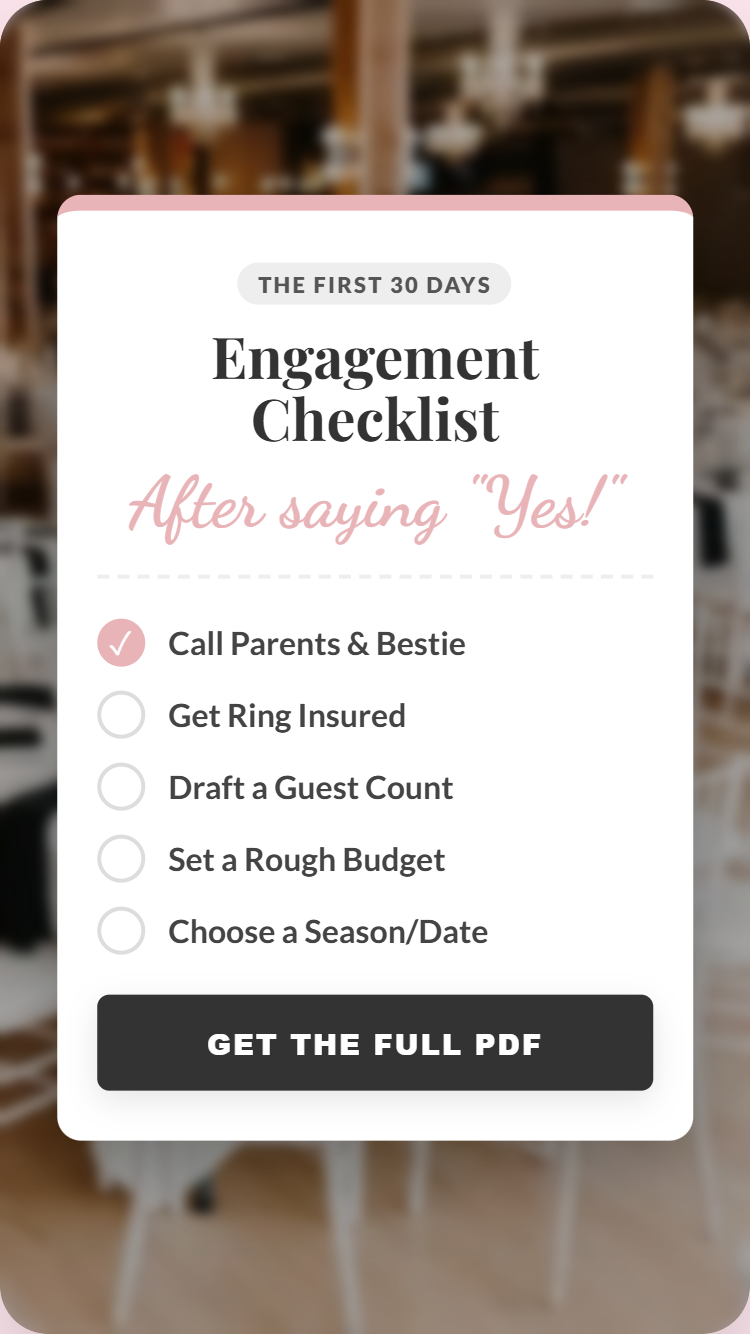
A Realistic 30-Day Engagement Checklist (Expanded)
Days 1–7
- celebrate
- announce thoughtfully
- emotional check-in
- protect your joy
Days 8–14
- discuss timeline
- dream freely
- set boundaries
- listen deeply
Days 15–21
- start shared planning space
- discuss money comfort
- estimate guest size
Days 22–30
- ring care
- engagement photo decision
- define priorities
- weekly relationship check-in
Final Words: You’re Not Behind
If you’re reading this thinking:
“We haven’t done all of this…”
You’re okay.
Engagement isn’t about completing tasks.
It’s about learning how to move forward together.
Slow is not lazy.
Intentional is not boring.
Calm is not unprepared.
You said yes to a person.
Not a timeline.
Not a checklist.
Not expectations.
And if you keep choosing each other —
the rest will fall into place.
💍✨