
Let’s be real for a second.
Not everyone enjoys spending hours in the garden pulling weeds, watering plants, fertilizing soil, and constantly maintaining everything like it’s a full-time job.
Some people just want a garden that looks good… without turning into a weekend project every weekend.
And honestly? That’s completely valid.
The good news is this: you don’t need to work hard to have a beautiful garden. You just need smarter systems, better shortcuts, and a few “lazy genius” tricks that do most of the work for you.
This guide is exactly that.
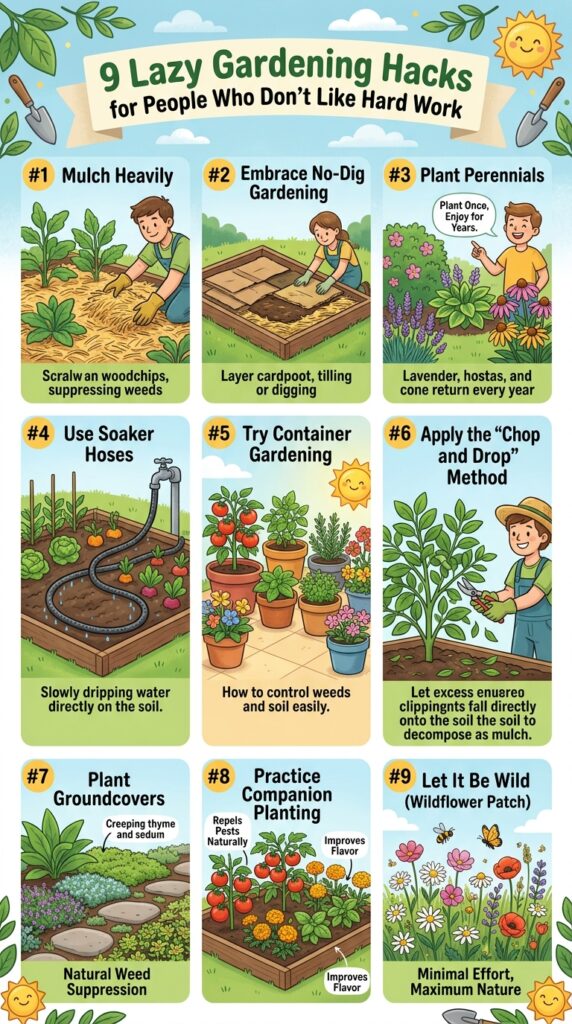
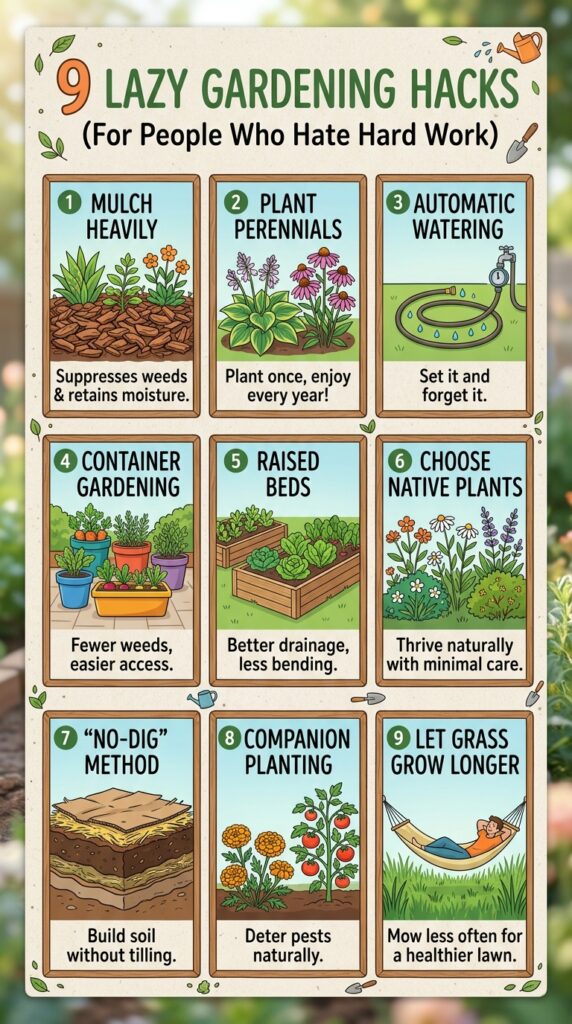
These are 9 lazy gardening hacks for people who want a great-looking garden with minimal effort—perfect for busy homeowners, apartment dwellers, beginners, or anyone who just doesn’t want gardening to feel like homework.
Why Lazy Gardening Actually Works (Yes, Really)
Before we jump into hacks, let’s clear something up.
“Lazy gardening” doesn’t mean neglecting your plants. It means:
- Working with nature instead of against it
- Reducing repetitive tasks
- Choosing low-maintenance systems
- Designing your space so it practically takes care of itself
Think of it like automation—but for plants.
Once you set things up properly, your garden starts doing most of the work on its own.
1. Choose “Unkillable” Plants (Seriously, This Changes Everything)
If you hate maintenance, your first decision is everything.
Some plants demand constant attention. Others basically survive on vibes.
Best Lazy-Friendly Plants:
- Snake plant
- Lavender
- Mint (spreads like crazy)
- Succulents
- Rosemary
- Zinnias
- Marigolds
Why This Works
Hardy plants:
- Need less watering
- Resist pests naturally
- Survive temperature changes
- Don’t require constant trimming
Lazy Rule of Thumb
If a plant dies easily, skip it. If it survives neglect, it belongs in your garden.
2. Use Self-Watering Planters (Set It and Forget It)
This is one of the biggest game-changers in lazy gardening.
Self-watering planters use a reservoir system that slowly feeds water to plants as needed.
How It Works
Instead of watering daily, you:
- Fill a tank every few days or weeks
- Let the plant absorb what it needs
Why It’s Genius
- Prevents overwatering
- Reduces watering frequency
- Keeps plants consistent and healthy
Best For:
- Herbs
- Indoor plants
- Balcony gardens
- Busy schedules
If you only adopt ONE hack from this list, make it this one.
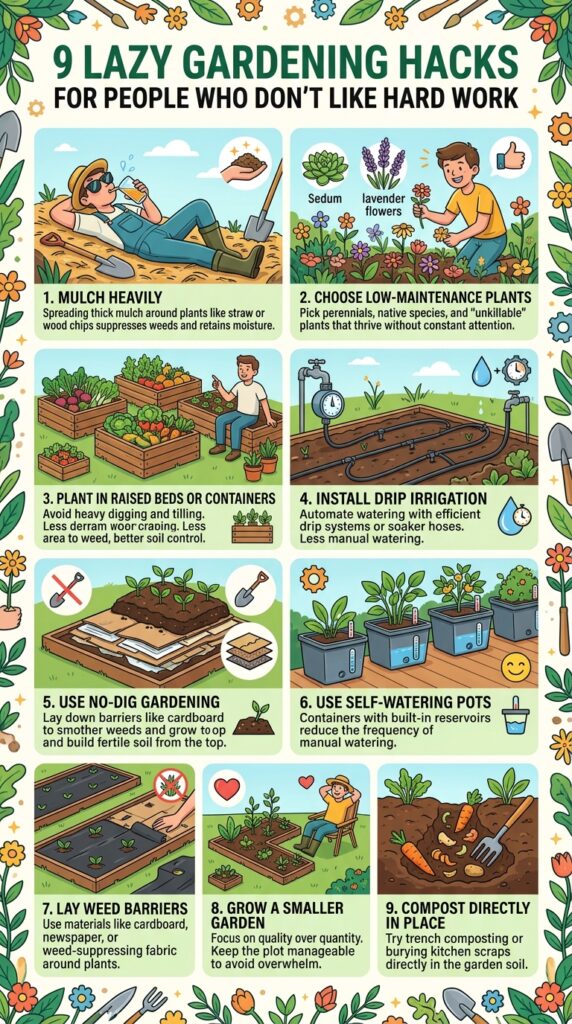
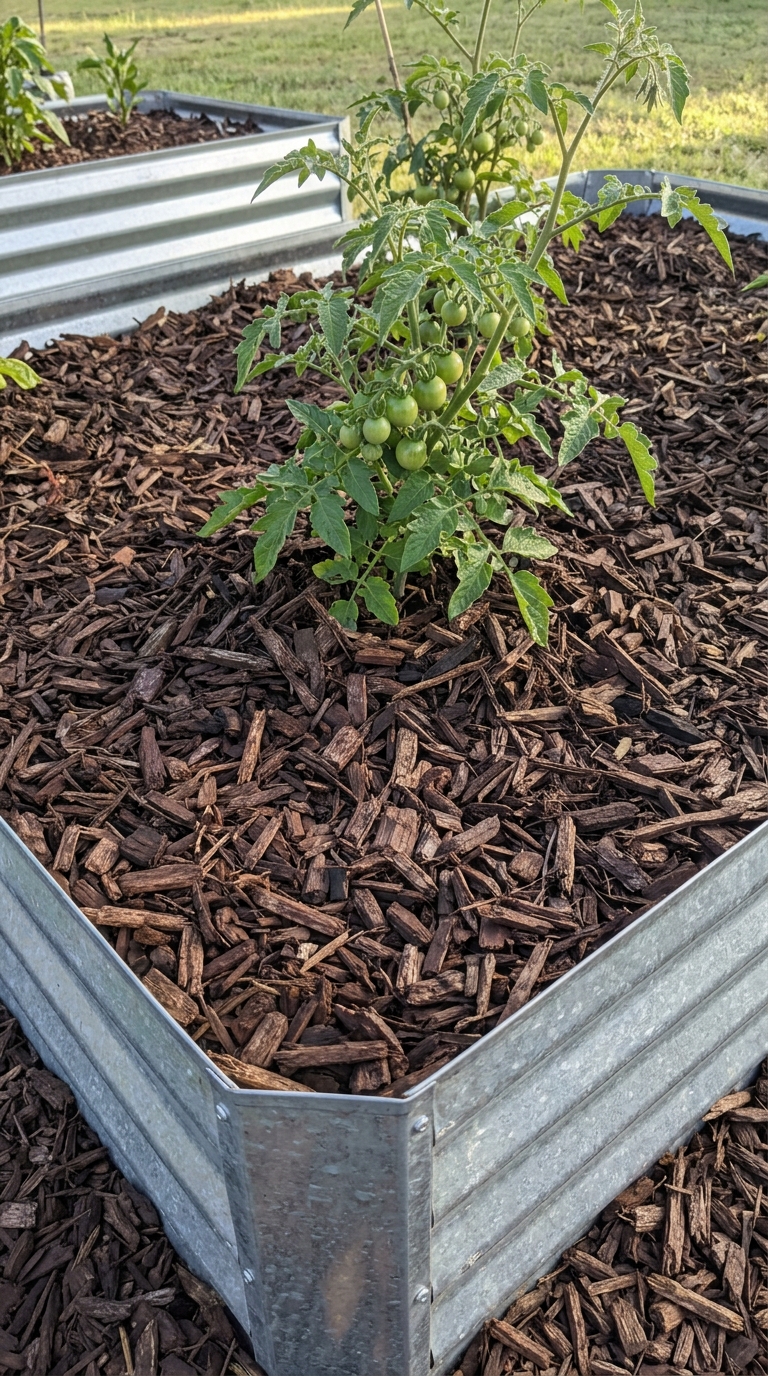
3. Mulch Everything (Your Garden’s Secret Shield)
Mulch is like a protective blanket for your soil—and lazy gardeners love it.
What Mulch Does:
- Stops weeds from growing
- Keeps soil moist longer
- Reduces watering needs
- Improves soil health over time
Types of Mulch:
- Wood chips
- Straw
- Bark
- Leaves
Why It Works
Instead of constantly weeding and watering, mulch handles it for you.
Pro Tip
Apply a thick layer (2–3 inches) around plants and you’ll instantly reduce maintenance.
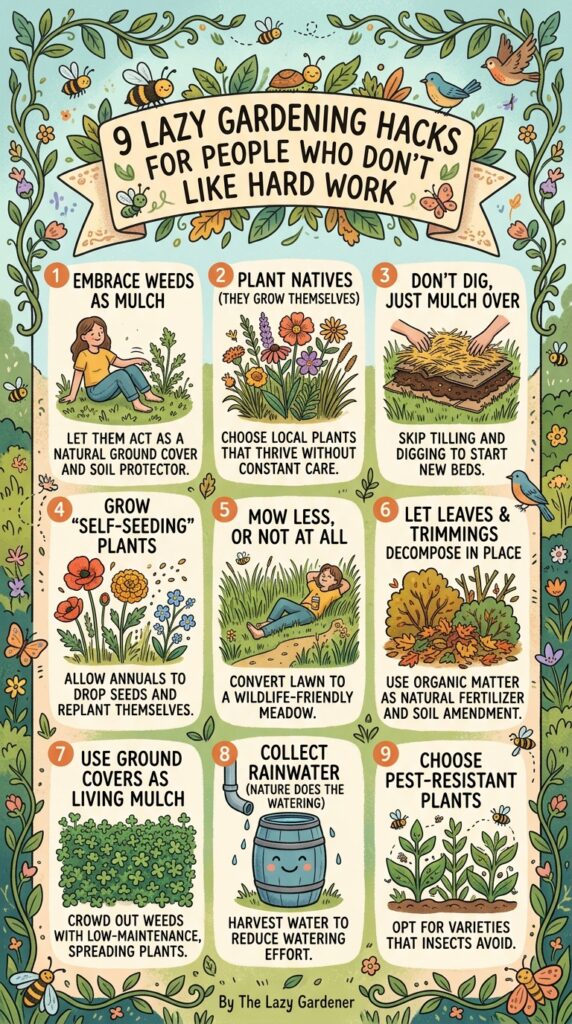
4. Drip Irrigation (Water Without Thinking)
If watering plants feels like a chore, automate it.
Drip irrigation slowly delivers water directly to plant roots.
How It Works
- Tubes run through your garden
- Small emitters release water gradually
- Timer controls watering schedule
Why It’s Lazy Genius Level
- No daily watering
- No guessing
- No overwatering
- Saves water too
Best Use Case
- Outdoor gardens
- Raised beds
- Vegetable patches
Once installed, you basically stop thinking about watering entirely.
5. Grow Perennials Instead of Annuals
Here’s a trick most beginners don’t know:
👉 Annual plants die every year. Perennials keep coming back.
Lazy-Friendly Perennials:
- Lavender
- Hostas
- Daylilies
- Mint
- Rosemary
- Ornamental grasses
Why This Matters
With perennials:
- You plant once
- They return every year
- Less replanting
- Less soil preparation
Lazy Gardening Logic
The less you replant, the less work you do.
6. Let Nature Do the Weeding (Ground Cover Strategy)
Weeds are one of the biggest time drains in gardening.
So instead of constantly fighting them… block them permanently.
What to Do
Use ground cover plants that spread and fill empty space.
Examples:
- Clover
- Creeping thyme
- Ajuga
- Sweet woodruff
Why It Works
- Blocks sunlight from weeds
- Covers soil naturally
- Reduces maintenance dramatically
Bonus Strategy
Combine ground cover + mulch for near-zero weeding.
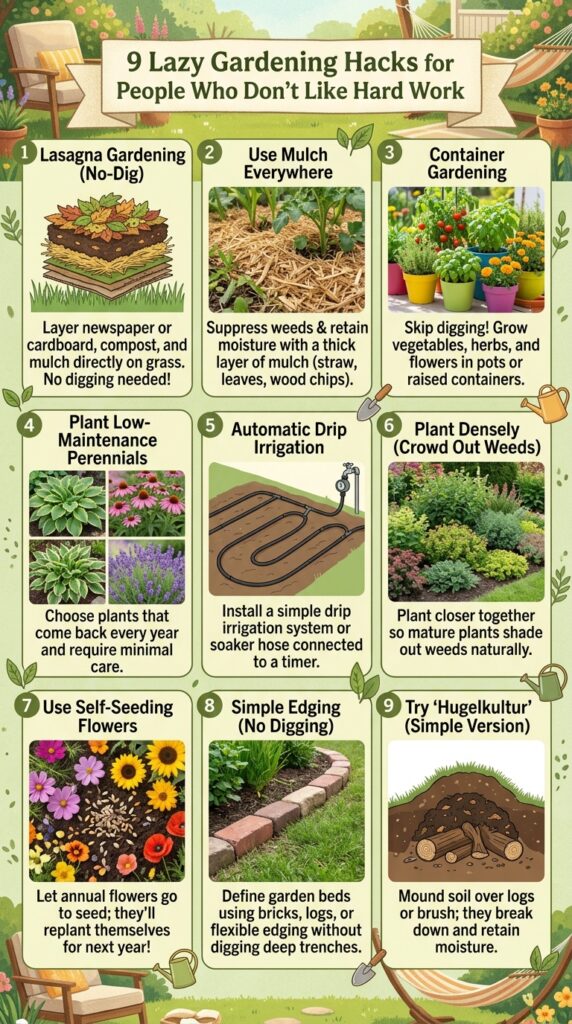
7. Container Gardening (Less Soil, Less Stress)
Containers are perfect for lazy gardeners.
Why? Because they:
- Limit plant growth to manageable sizes
- Reduce weed growth
- Make watering easier
- Keep everything organized
Lazy Container Setup:
- Large pots (fewer watering cycles)
- Self-watering containers
- Group plants together
Best Plants for Containers:
- Herbs
- Tomatoes
- Flowers
- Strawberries
Why It Works
Less space = less chaos.
8. Group Plants by Water Needs (Stop Overthinking Watering)
One of the most common gardening mistakes is mixing plants with different needs.
That creates confusion and extra work.
Instead, group like this:
Low Water Zone:
- Succulents
- Lavender
- Rosemary
Medium Water Zone:
- Herbs
- Flowers
- Lettuce
High Water Zone:
- Tomatoes
- Cucumbers
- Hydrangeas
Why It’s Lazy Genius
You stop guessing and start watering efficiently.
One zone = one routine.

9. Use “No-Dig” Gardening (Minimal Soil Work Forever)
If digging and tilling sound like a nightmare, this method is for you.
No-dig gardening means you never disturb the soil once it’s set up.
How It Works:
- Layer compost on top of soil
- Add mulch
- Plant directly into layers
Benefits:
- Fewer weeds
- Better soil health
- Less physical effort
- More natural ecosystem
Why It’s So Popular
It mimics how forests naturally grow—no digging required.
Bonus Lazy Gardening Tips (Because You Deserve Extra Help)
These aren’t full hacks—but they make everything easier:
1. Use timers for watering systems
Let automation handle consistency.
2. Choose slow-growing plants
Less trimming, less pruning.
3. Keep your garden small
Smaller space = less maintenance.
4. Don’t aim for perfection
A “good enough” garden is still beautiful.
Common Mistakes Lazy Gardeners Should Avoid
Even lazy gardening can go wrong if you’re not careful.
Avoid These:
- Overwatering out of habit
- Choosing high-maintenance plants
- Ignoring sunlight needs
- Overcrowding plants
- Skipping mulch
The goal is less effort—not bad results.
Example Lazy Garden Setup (Realistic Plan)
Here’s what a fully lazy-friendly garden could look like:
- Self-watering containers with herbs
- Mulched flower beds with perennials
- Drip irrigation system
- Ground cover instead of weeds
- A few decorative shrubs
- One or two focal plants
Maintenance?
👉 About 15–30 minutes a week.
The Lazy Gardener Mindset Shift
The biggest secret isn’t tools or hacks.
It’s mindset.
Stop asking:
“How much work will this take?”
Start asking:
“How can I set this up so it takes care of itself?”
That single shift turns gardening from exhausting… into enjoyable.
Final Thoughts: You Don’t Need to Work Hard to Have a Beautiful Garden
A great garden isn’t about effort.
It’s about smart design, smart plant choices, and systems that reduce work automatically.
With just a few of these lazy gardening hacks, you can create a space that:
- Looks beautiful
- Requires minimal maintenance
- Fits into your lifestyle
- Doesn’t drain your energy
Start small. Pick 2–3 hacks. Build from there.
Because the best garden isn’t the one you work hardest on…
It’s the one that quietly takes care of itself while you enjoy it.
Quick Recap
- Choose low-maintenance plants
- Use self-watering systems
- Mulch everything
- Automate watering with drip irrigation
- Grow perennials instead of annuals
- Use ground cover to stop weeds
- Stick to container gardening
- Group plants by water needs
- Try no-dig gardening