
Wedding planning checklists exist for a reason. It’s easy to remember big things like the venue or dress and completely forget small details that quietly cause stress later. People searching for wedding checklist items usually want reassurance that nothing slips through the cracks. This list focuses on real planning moments couples often miss, especially when working with tight budgets or short timelines. Each item below helps you stay organized without adding pressure or extra spending.
Set a Realistic Overall Budget
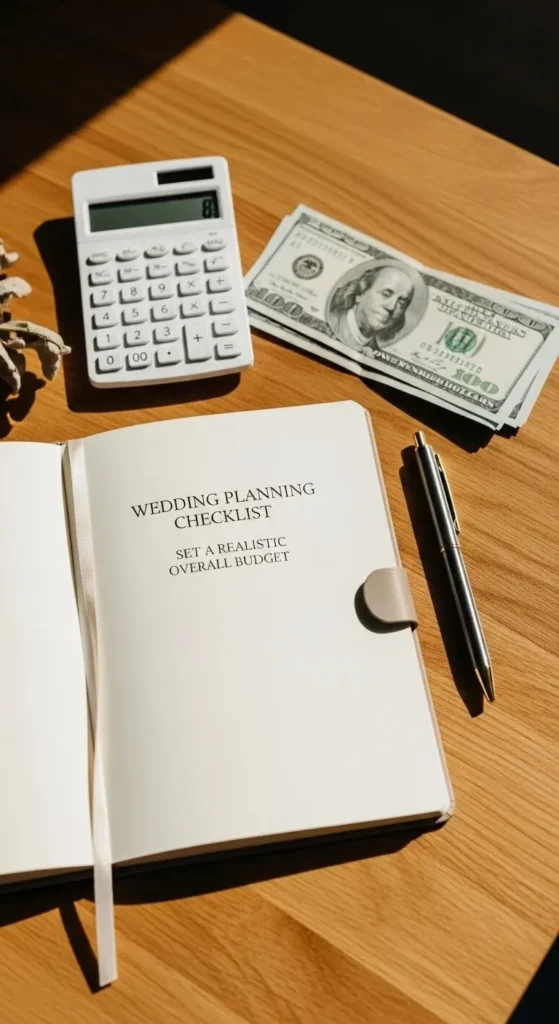
A clear budget shapes every planning choice. Start with a total number you’re comfortable spending. Write it down. Split it into categories like venue, food, outfits, and photography. Keep a small buffer for surprises. This avoids last-minute stress. Use a simple spreadsheet or notebook. No fancy tools required. Update it after every payment. Seeing numbers clearly helps prevent overspending. If money feels tight, prioritize what matters most to you as a couple. Cut back on items guests won’t remember later. A clear budget gives confidence when vendors quote prices. It also helps family conversations stay calm and focused.
Lock the Wedding Date Early
Everything depends on the date. Venues, photographers, and caterers book quickly. Choose a date as soon as possible and stick to it. Flexibility helps if your top choice isn’t available. Weekdays and off-season dates often cost less. Once the date is fixed, planning becomes easier. Share it clearly with close family. This avoids confusion later. Write it at the top of your checklist so it stays visible.
Book the Venue Before Anything Else
The venue decides the tone, size, and schedule of your wedding. Book it before dresses, decor, or invites. Ask what’s included. Tables, chairs, and lighting often come with the space. This can save money. Check backup plans for weather. Read the contract carefully. Visit the venue at the same time of day as your event. That shows real lighting and noise levels.
Create a Rough Guest List Early
Guest count affects almost every cost. Start with a rough list early. Don’t aim for perfection. Just get a number range. This helps when comparing venues and catering quotes. Separate must-invite guests from optional ones. If the list grows, adjust expectations elsewhere. Keeping this list updated avoids awkward surprises later.
Decide Your Wedding Style
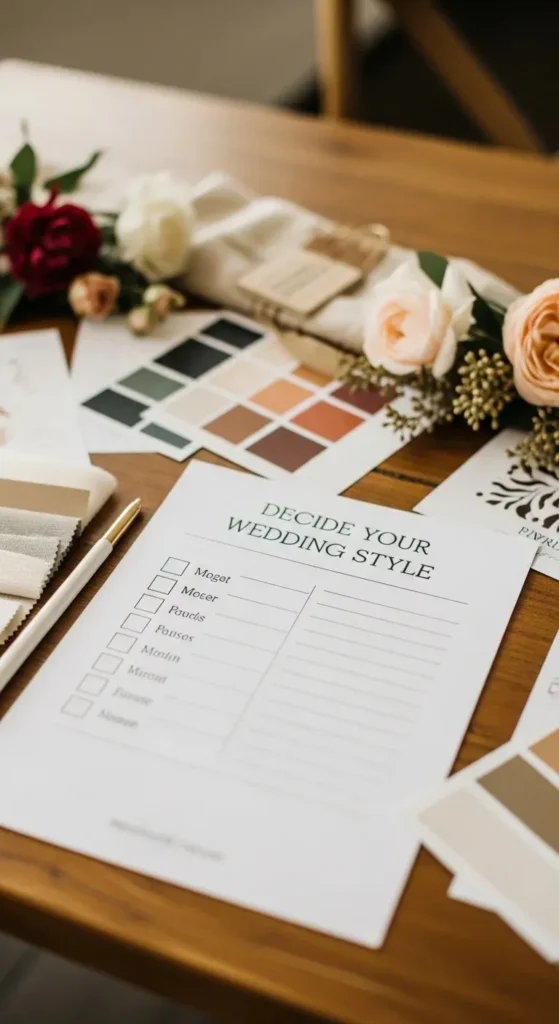
Style guides choices. Formal, casual, outdoor, indoor, daytime, or evening. Pick a general vibe early. This avoids clashing decisions later. Look at saved photos together and find patterns. Use that direction for outfits, decor, and stationery. A clear style helps you say no faster, which saves money and time.
Hire Key Vendors Early
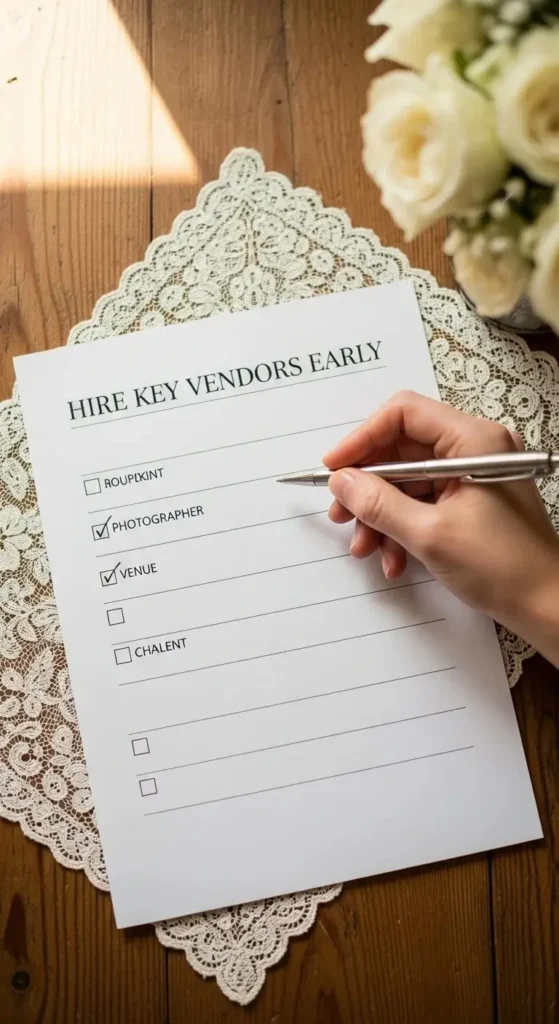
Photographers, caterers, and planners book fast. Reach out soon after booking the venue. Compare at least two options. Ask what’s included. Clear communication avoids hidden costs. If budget is limited, prioritize vendors tied to memories, like photography. You can DIY decor later.
Read Every Contract Carefully
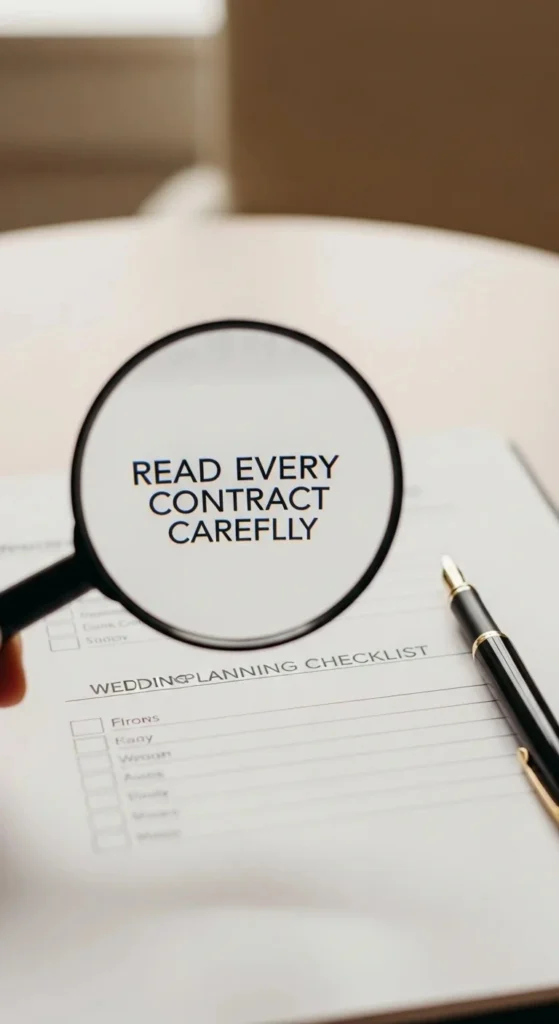
Contracts protect both sides. Read all details before signing. Check payment schedules and cancellation terms. Ask questions if anything feels unclear. Keep copies in one folder. This saves stress if plans change. Never rely only on verbal promises.
Choose the Wedding Party
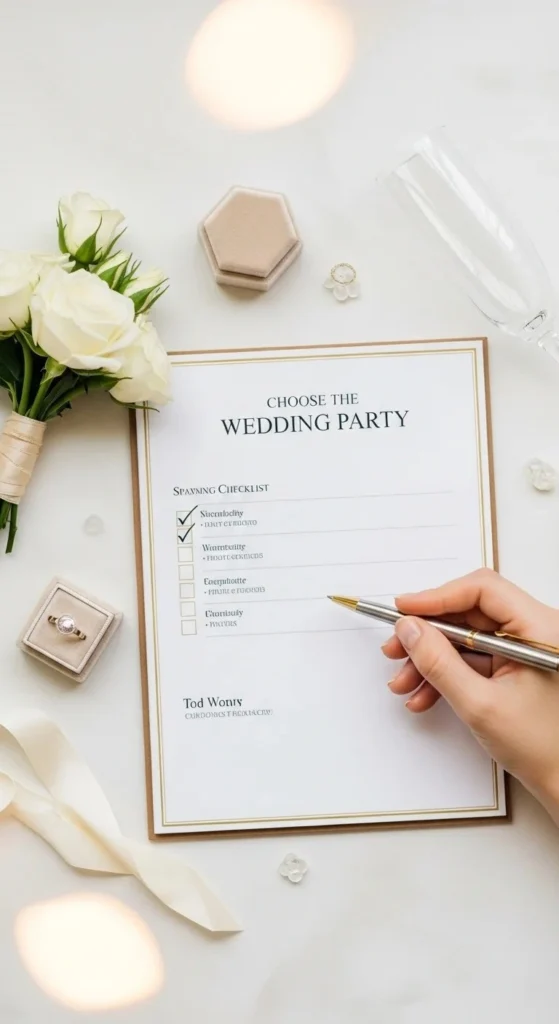
Choose people who support you, not just tradition. Smaller wedding parties reduce costs and coordination issues. Let them know expectations early. Share dates and roles clearly. This avoids confusion later. Comfortable people make the day smoother.
Plan Attire Timelines
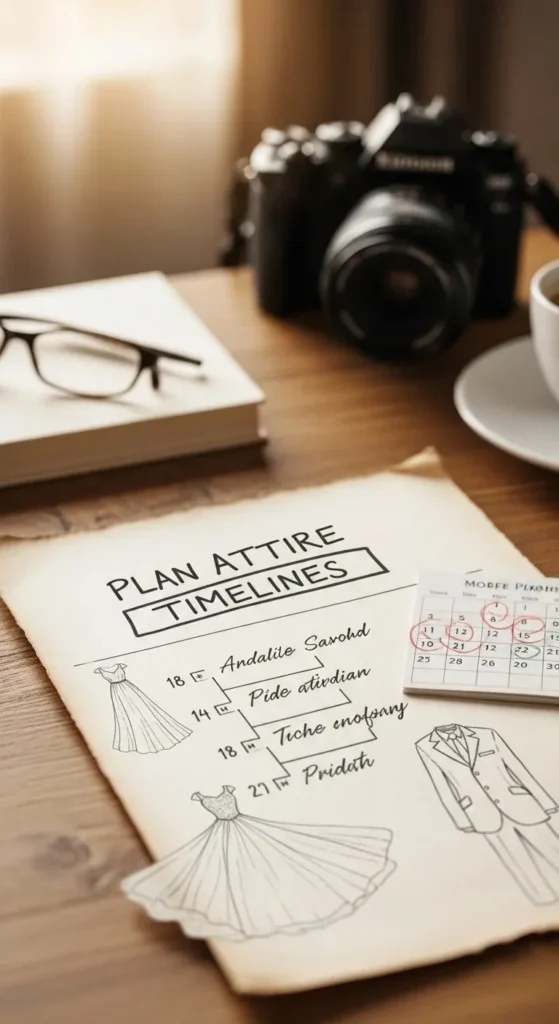
Outfits take time. Order dresses and suits early. Alterations add weeks. Shoes and accessories matter too. Try everything together once. This prevents last-minute panic. Buying off-the-rack or secondhand can save money and time.
Schedule Hair and Makeup Trials
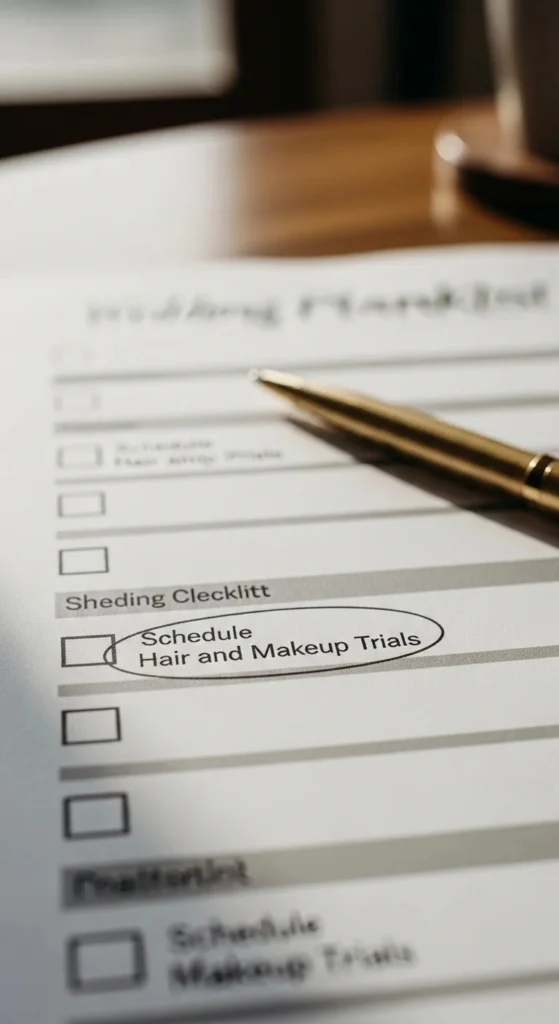
Trials avoid surprises. Book them well before the wedding. Take photos in natural light. Wear a similar outfit color. Share honest feedback. Trials also help plan timing for the wedding day schedule.
Finalize the Menu
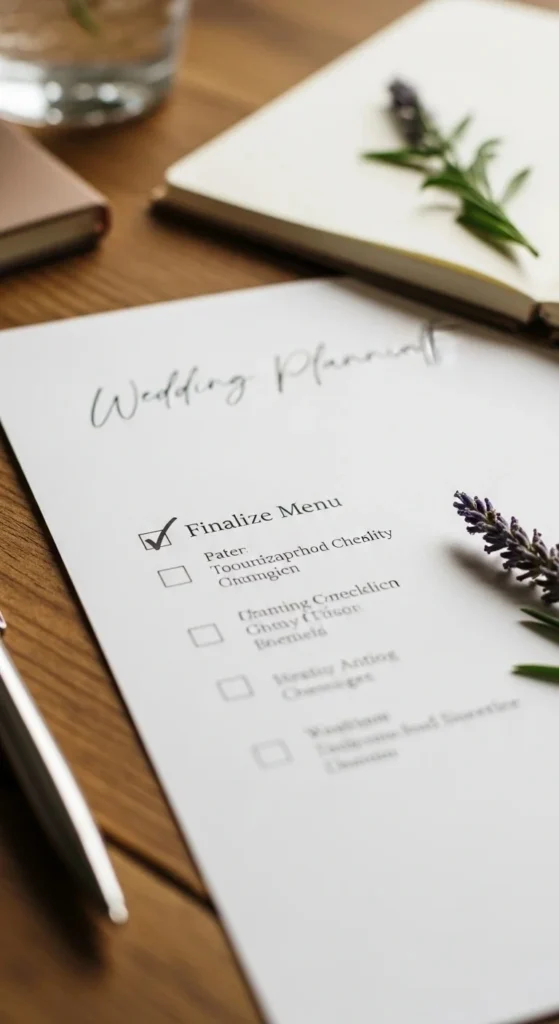
Food shapes guest experience. Choose items that hold well over time. Ask about dietary options. Simpler menus often cost less and taste better in large batches. Confirm serving style early to match your timeline.
Order the Cake Early
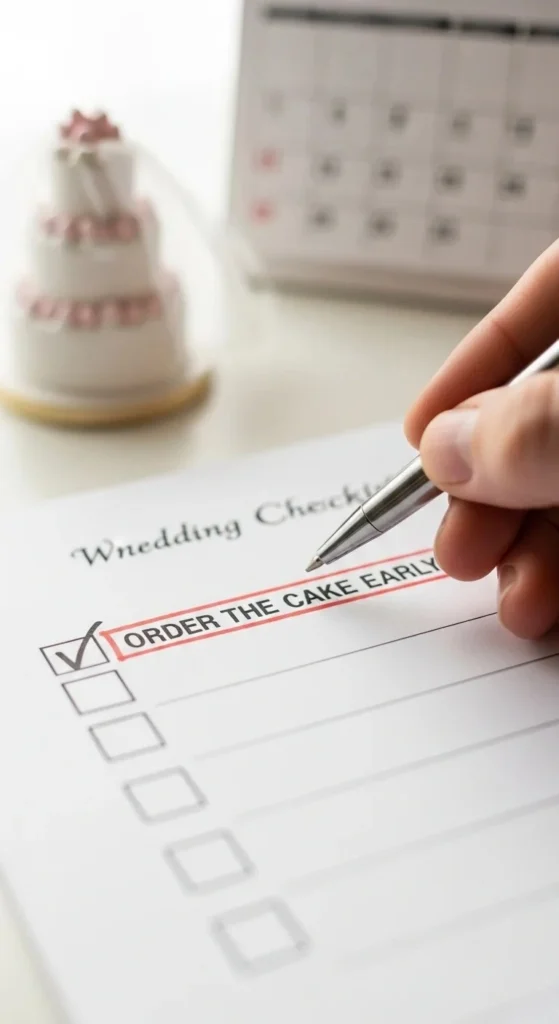
Cake designs take planning. Book early, especially during busy seasons. Simple designs reduce cost. Sheet cakes for guests work well. Confirm delivery details clearly.
Send Invitations on Time
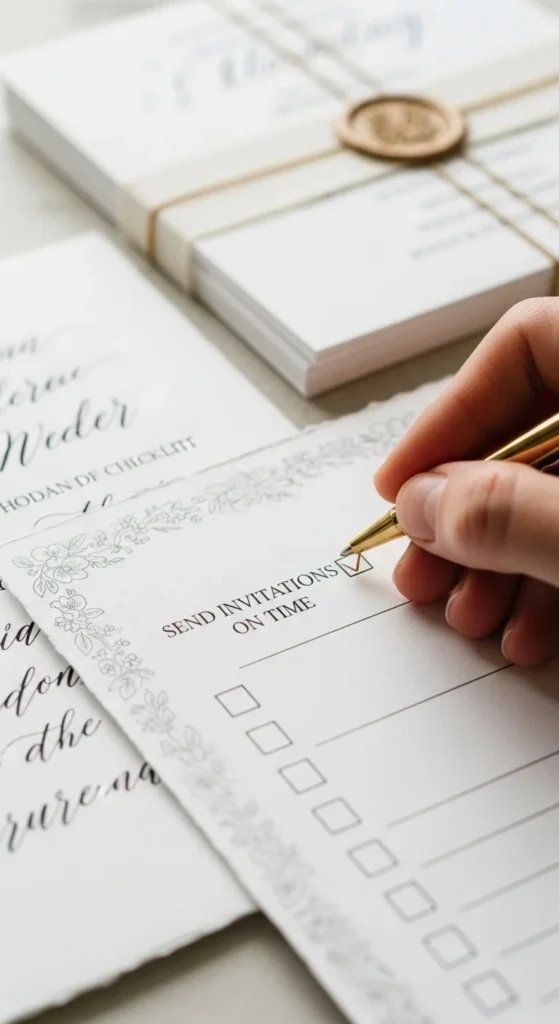
Mail invites with enough response time. Track RSVPs clearly. Digital tracking works fine. Follow up politely. Accurate counts help catering and seating plans.
Plan the Ceremony Details
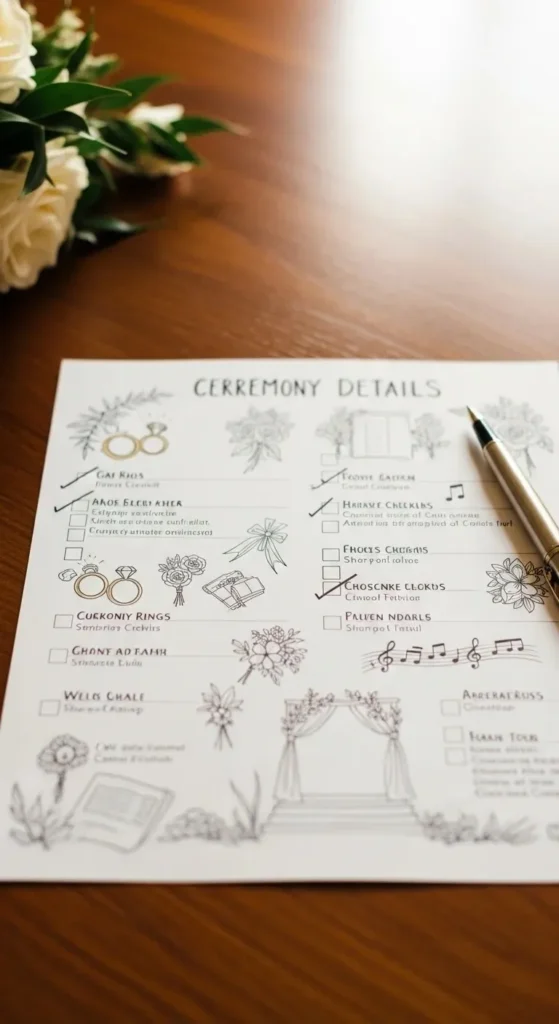
Think through music, seating, and readings. Keep it simple. Share plans with the officiant early. Practice once if possible. Short ceremonies hold attention better.
Arrange Transportation
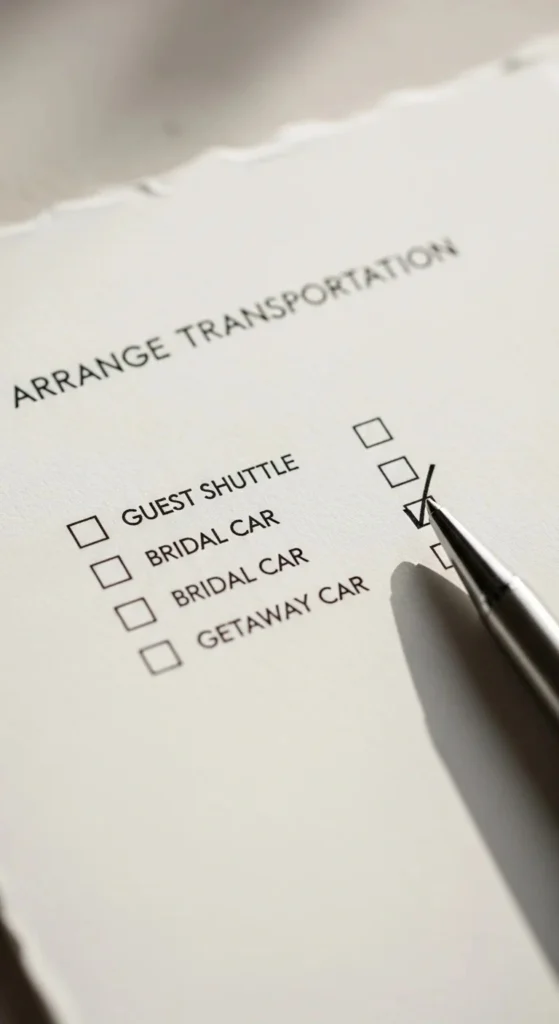
Moving people takes time. Plan transport between locations. Carpools save money. Share clear directions. Add buffer time for traffic.
Create a Day-Of Timeline
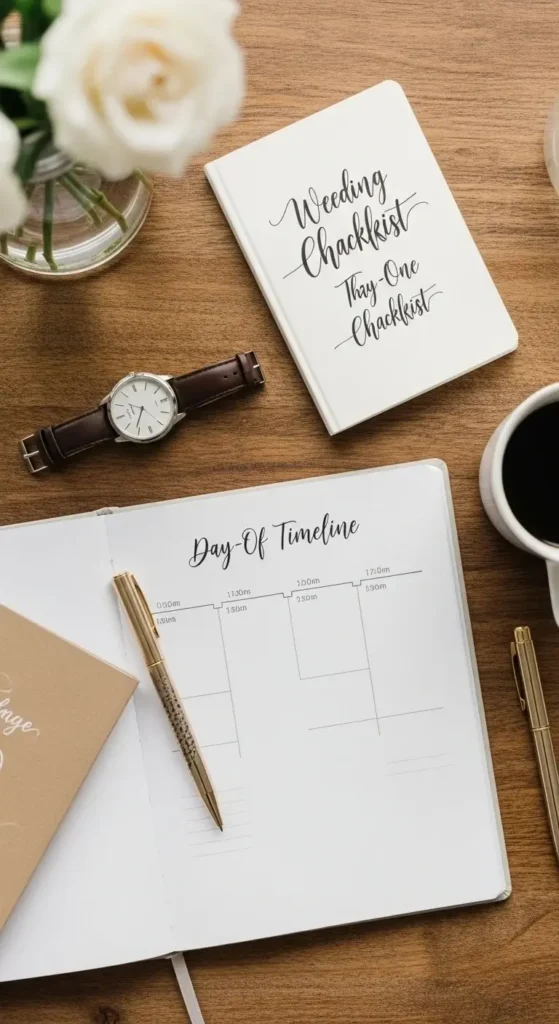
Write a simple timeline. Include start times and buffers. Share it with vendors and helpers. Printed copies work best. This keeps everyone aligned.
Assign a Point Person
Choose one trusted person to handle questions. This lets you enjoy the day. Brief them clearly. This small step prevents interruptions.
Prepare Payments and Tips
Prepare envelopes in advance. Label them clearly. Assign someone to hand them out. This avoids scrambling later.
Pack an Emergency Kit
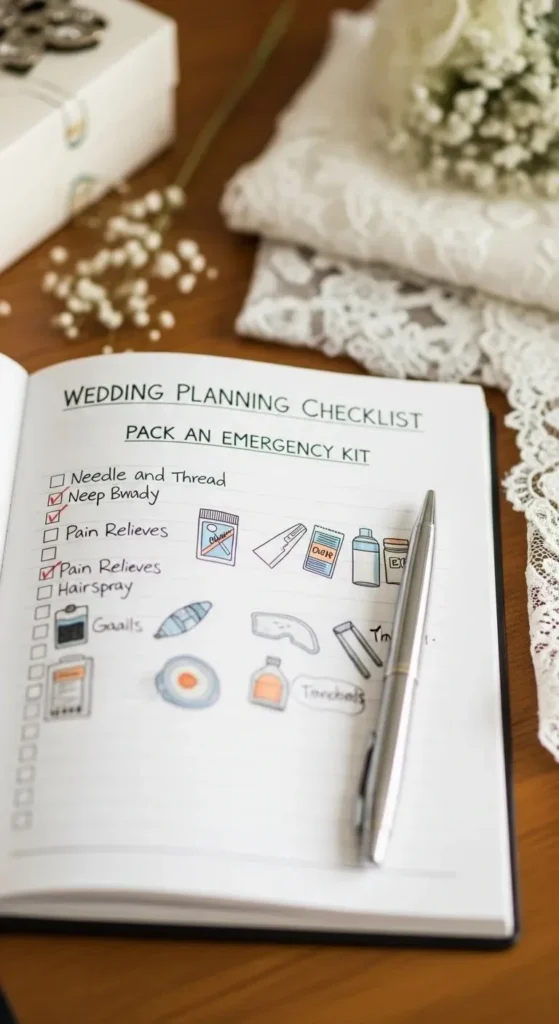
Include safety pins, pain relief, wipes, and bandages. Small kits solve big problems. Keep it nearby all day.
Confirm Vendors One Week Before
Send short confirmation messages. Recheck times and addresses. This avoids miscommunication. Written confirmations matter.
Prepare Marriage Documents
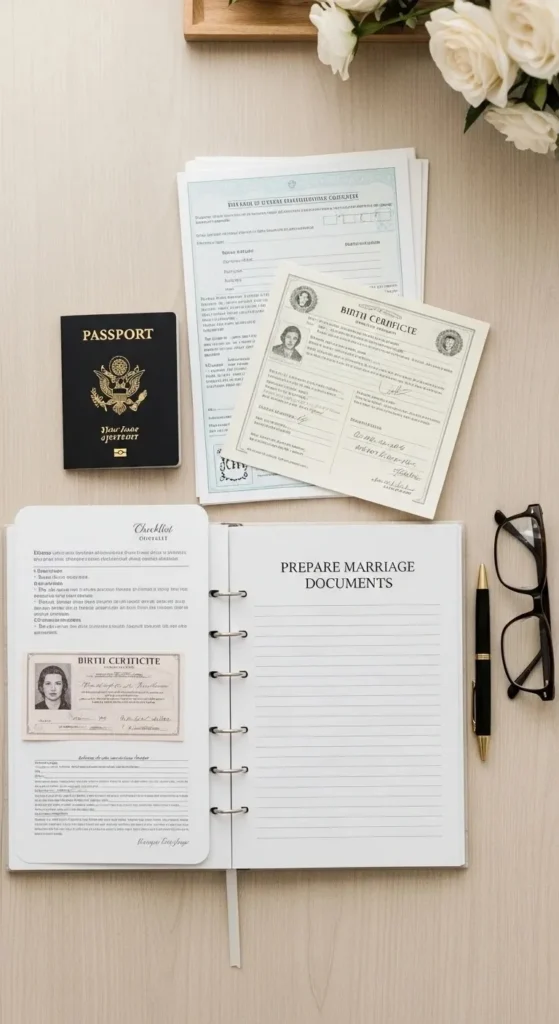
Paperwork gets overlooked. Check local rules early. Gather documents and keep them safe. Assign someone to handle them on the day.
Plan the Exit
Decide how the night ends. Keep it simple. Sparklers, bubbles, or a quiet goodbye all work. Timing matters more than props.
Pack for the Next Day
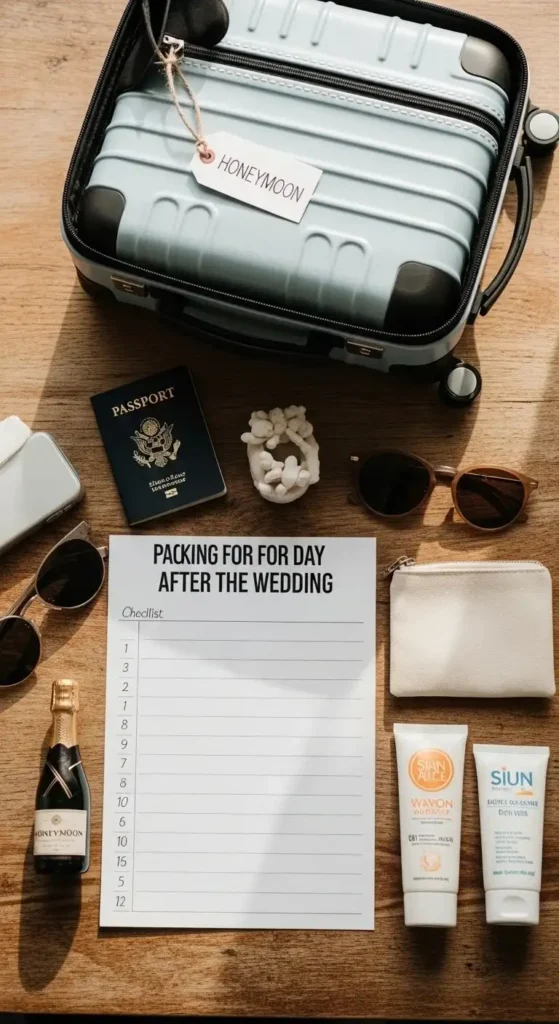
Pack clothes, chargers, and essentials early. Do it before wedding week. This saves energy after the event.
Conclusion
Wedding planning feels easier when nothing important gets missed. A clear checklist keeps decisions grounded and stress lower. You don’t need perfection or expensive tools to stay organized. Pick a few items from this list and review them weekly. Small steps taken early lead to a calmer planning process and a wedding day that feels truly enjoyable.