
A thoughtful seating arrangement can completely shape the atmosphere of a wedding reception. When guests easily find their seats and sit near people they enjoy, conversations flow and the room feels welcoming. A well-planned layout also helps servers move around smoothly and keeps the event organized.
Couples often focus heavily on décor, food, and music. Yet seating plans quietly influence how comfortable guests feel throughout the evening. The good news is that you do not need an expensive planner or complex design to make it work.
With a few creative ideas, simple DIY touches, and smart grouping of guests, your seating arrangement can feel warm, organized, and personal. The ideas below offer practical layouts and fun concepts that make guests feel included while keeping the setup affordable and easy to manage.
Round Tables for Natural Conversations
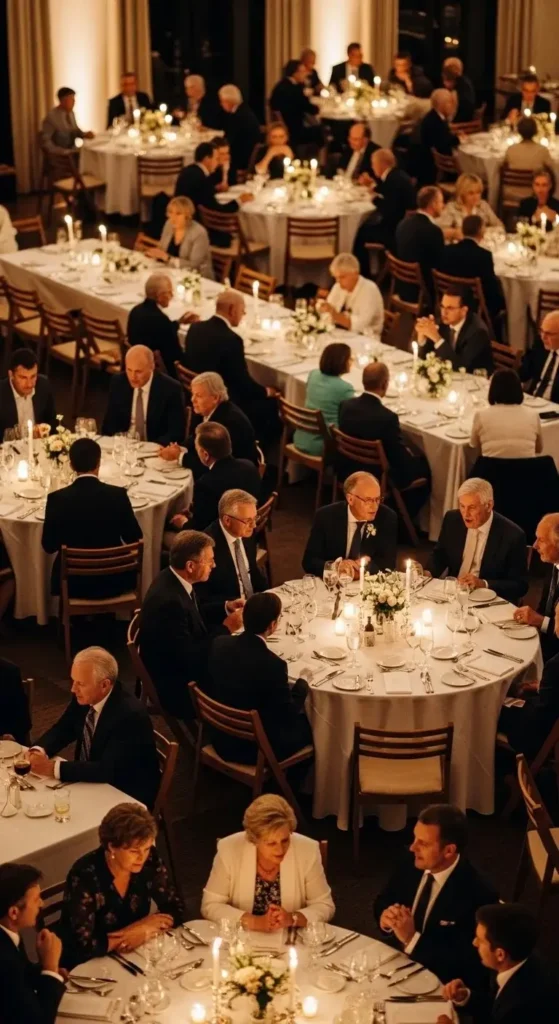
Round tables remain one of the easiest ways to keep guests comfortable.
Everyone can see each other without turning their chairs. Conversations feel natural and relaxed.
For many venues, tables that seat 6–8 people work best. This size keeps the group friendly without feeling crowded.
Budget tip: rent simple round tables and decorate them yourself.
Use inexpensive touches such as:
- mason jar centerpieces
- greenery from local flower markets
- small candles in glass holders
These small details create a warm look without spending a lot.
Another smart trick is mixing guest types at each table.
Pair family members with a few friends. Add one outgoing person to keep the table lively.
Leave space between tables so servers can move easily. This also helps guests walk around comfortably.
Round tables also photograph beautifully. When the reception room fills with laughter and movement, the layout naturally creates an inviting environment.
If you want something classic that almost always works, round tables remain a safe and friendly option.
Long Family-Style Tables
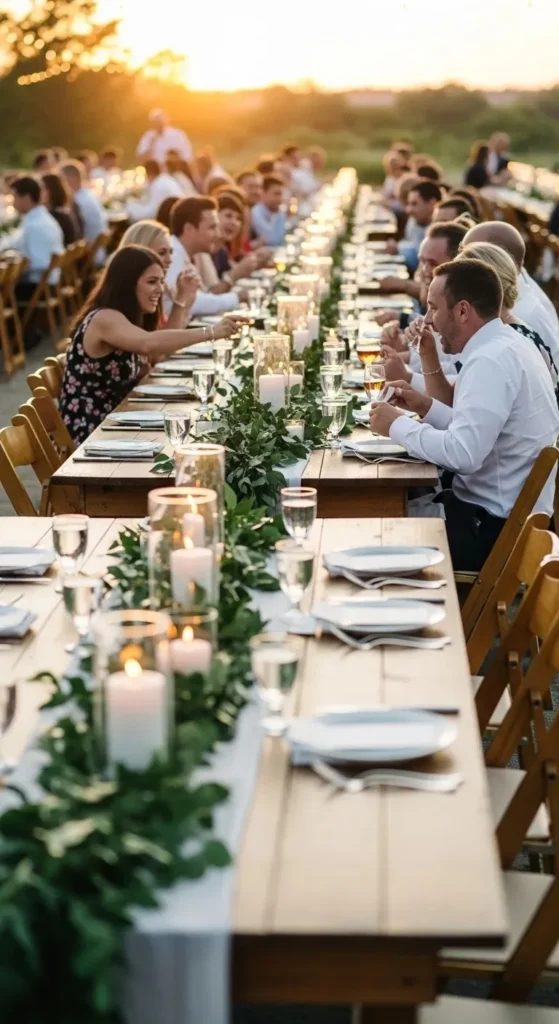
Long tables create a relaxed and social atmosphere.
Guests sit side-by-side like a large dinner gathering.
This setup works beautifully for rustic weddings, garden celebrations, or barn venues.
You can rent wooden farm tables or combine standard tables with tablecloths and runners.
DIY tip: use a simple greenery runner down the center of the table.
Add small candles or mini flowers spaced along the length. This creates a charming look without expensive floral arrangements.
Another advantage of long tables is fewer centerpieces. Instead of decorating ten small tables, you decorate just a few larger ones.
Group guests by interests or friendships.
Friends from college can share one table. Cousins can share another.
Long tables also encourage guests to interact beyond their immediate circle. Someone seated next to a new person may start a great conversation.
If your venue has a large open space, long tables can create a cozy communal dining feel that guests remember long after the wedding.
Sweetheart Table for the Couple
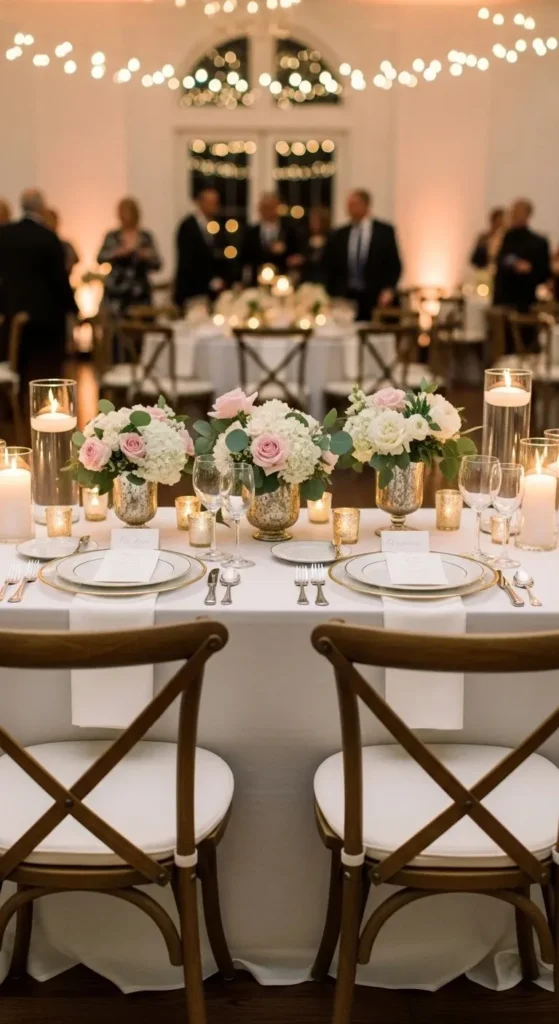
A sweetheart table gives the couple a quiet place during the reception.
Instead of sitting with the wedding party, the couple enjoys a small private table for two.
This idea helps when the guest list is large. Couples often find it hard to speak with everyone.
A sweetheart table offers short moments to relax.
You can still visit guests between courses or during dancing.
Decorate the table with slightly more detail than the others.
Budget-friendly ideas include:
- extra flowers from centerpieces
- fairy lights behind the chairs
- a small fabric backdrop
Position the table where guests can easily see you.
This keeps the couple visible during speeches and dinner.
Another advantage is flexibility.
Your wedding party can sit with their partners or friends instead of being grouped at a head table.
Many couples appreciate this balance between privacy and connection. It allows a small pause in a busy celebration.
Friends-Based Seating Groups
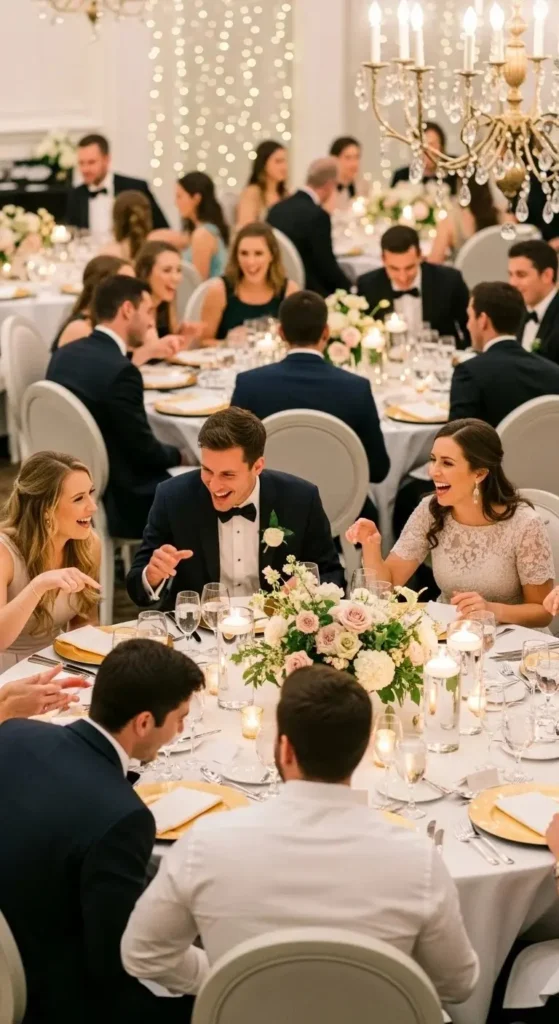
Guests feel relaxed when they sit with people they already know.
A friends-based seating plan groups guests according to their social circles.
College friends sit together. Work friends share another table. Childhood friends share another.
This layout keeps conversation flowing easily.
Start by listing your guest categories.
Examples may include:
- school friends
- cousins
- coworkers
- neighbors
Once grouped, place each circle at nearby tables.
DIY tip: create fun table names based on memories.
Tables could be named after places you traveled together or favorite songs.
Guests will enjoy recognizing the theme.
If a group has fewer people than a full table, add someone friendly who enjoys meeting new people.
Avoid placing very quiet guests with strangers if possible.
Comfortable seating groups create a relaxed energy across the entire reception room.
Guests laugh more, share stories, and stay longer when they feel at home at their table.
Family Priority Tables
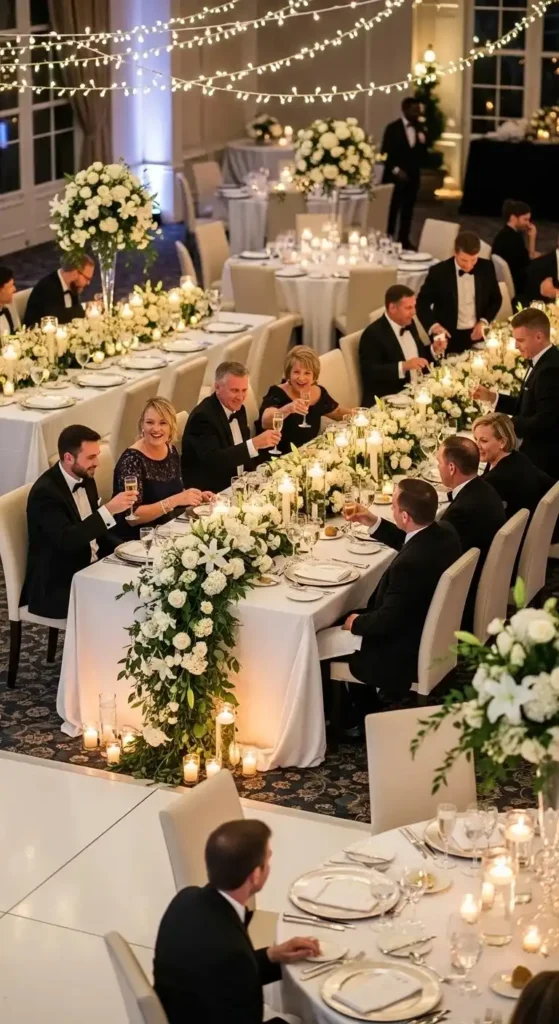
Family members often travel far to attend weddings.
Placing them near the center of the room shows appreciation.
Parents, grandparents, and siblings usually sit closest to the couple.
These tables can face the dance floor or stage.
This placement makes it easier for family members to participate in speeches and special moments.
Decorating family tables slightly differently can help them stand out.
Budget ideas include:
- slightly taller centerpieces
- different colored napkins
- photo frames with family pictures
You do not need expensive décor. Small visual touches work well.
Another helpful trick is assigning a friendly relative to help guide older guests to their seats.
This makes arrival smoother for grandparents or elderly family members.
Family tables create a sense of closeness during dinner.
It reminds guests that the celebration brings two families together.
Alphabetical Seating Chart Wall
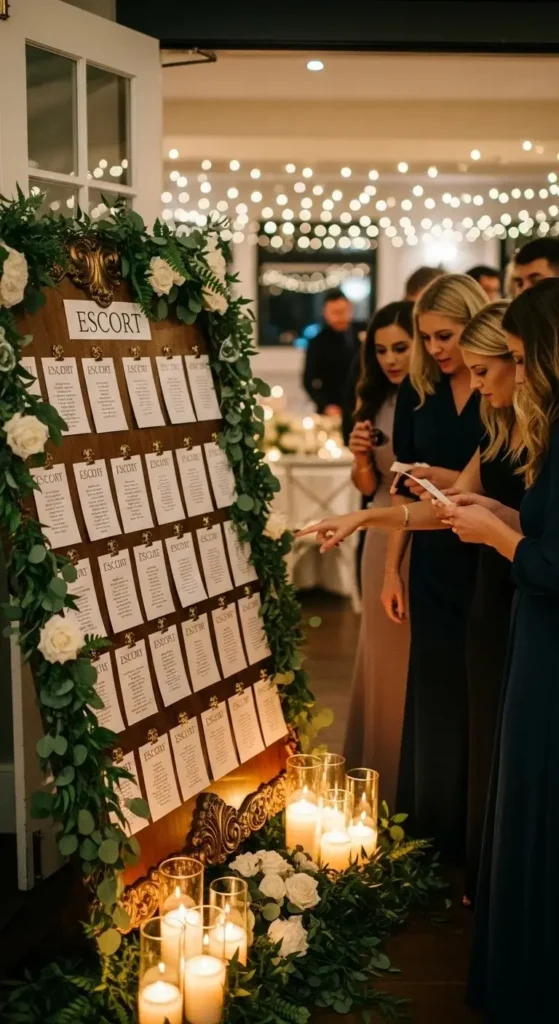
A seating chart wall makes finding seats simple.
Instead of searching through many tables, guests look up their names quickly.
Arrange escort cards alphabetically by last name.
Place them on a board, mirror, or wooden frame.
DIY idea: use craft paper cards and attach them with small clips or ribbon.
Decorate the board with:
- eucalyptus leaves
- fairy lights
- small flowers
Position the chart near the entrance of the reception space.
Guests see it as soon as they arrive.
This layout also prevents crowding around tables while people search for their names.
If you have a large guest list, divide the board into two sections.
Example: A–L on one side, M–Z on the other.
Alphabetical seating charts are simple, organized, and easy for guests to navigate.
Lounge-Style Seating Areas
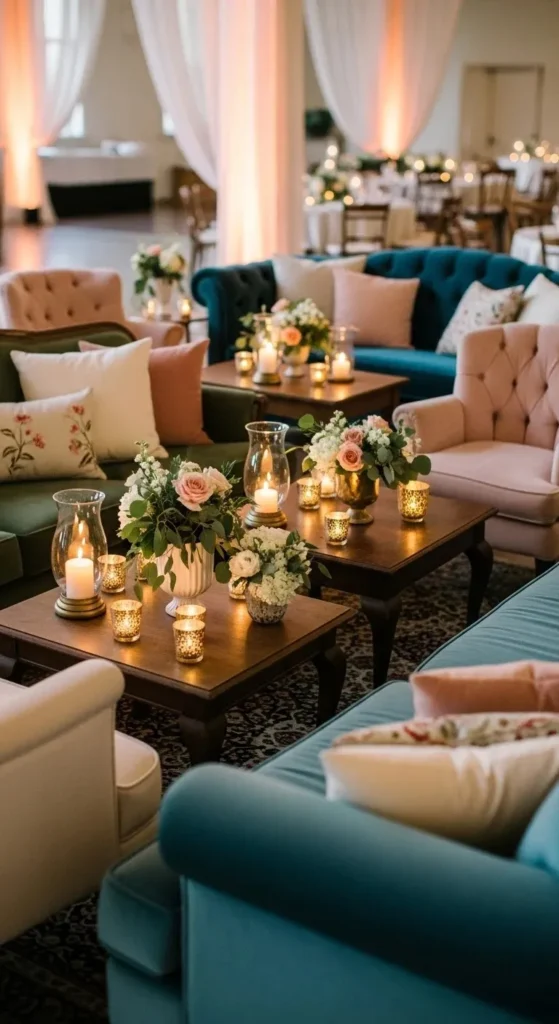
Not every guest enjoys sitting at a table all evening.
Lounge areas give guests a place to relax.
You can create them using:
- rented sofas
- vintage chairs
- soft cushions
Arrange small coffee tables with candles or flowers.
These spaces work well near dance floors or outdoor patios.
Budget idea: borrow furniture from family members.
Even a few comfortable chairs and small tables can create a cozy corner.
Guests often use lounge spaces for quiet conversation or short breaks.
Older guests especially appreciate a softer seating option.
Keep the lounge area slightly separate from dining tables so the layout stays organized.
This type of seating adds personality to the reception while giving guests more freedom to move around.
Kids’ Activity Table
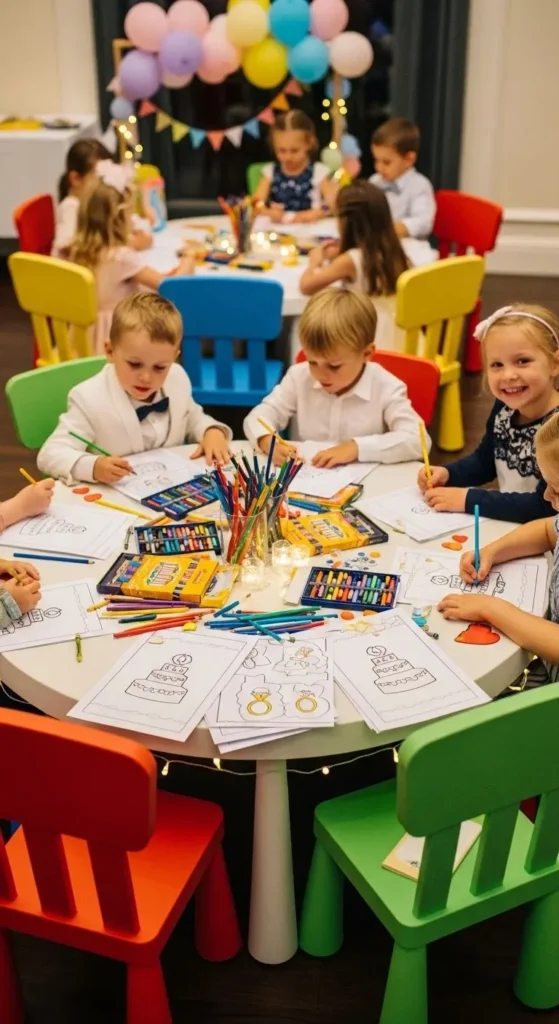
Children can become restless during long dinners.
A kids activity table helps them stay entertained.
Place the table slightly away from formal seating areas.
Add simple activities such as:
- coloring books
- crayons
- puzzle cards
- small toys
Use disposable craft supplies so cleanup stays easy.
Parents appreciate having a space where kids can enjoy themselves.
You can decorate the table with bright napkins or balloons.
Budget tip: print free coloring pages related to weddings or flowers.
Provide small snack cups with cookies or crackers.
Assign one older teenager or relative to occasionally check the table.
This small setup keeps kids busy and prevents them from feeling bored during speeches or dinner.
Mixed Generations Tables
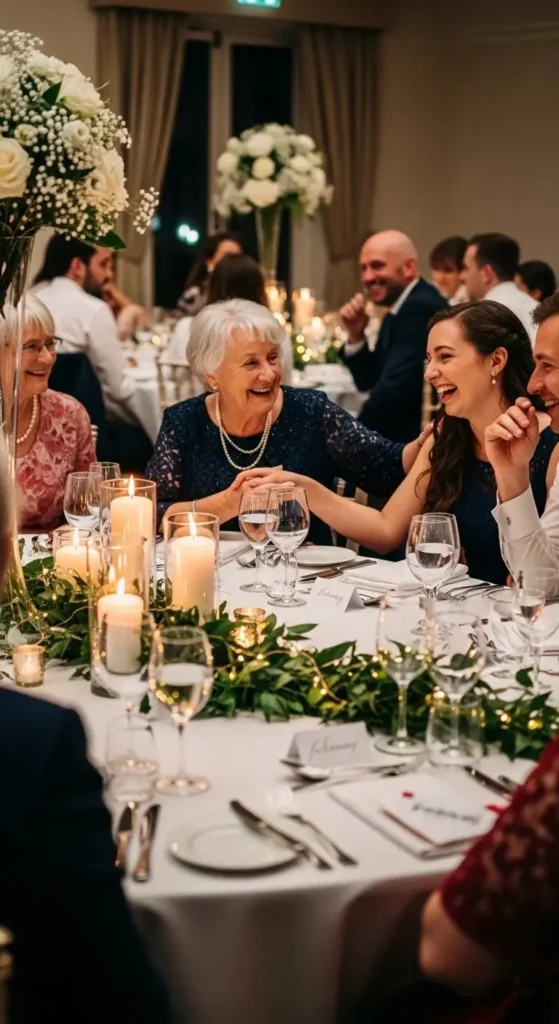
Mixing age groups can create fun conversations.
Instead of separating young and older guests, combine them.
Grandparents enjoy hearing stories from younger family members.
Young guests often appreciate family history and humor from elders.
Balance is the key.
Place talkative guests near quieter ones to help conversations start.
Avoid placing too many strangers together.
DIY idea: add small conversation starter cards on the table.
Examples:
- favorite travel memory
- funniest childhood moment
- favorite wedding song
These prompts encourage laughter and storytelling.
Mixed-generation tables create warm energy across the room.
Guests leave with new connections and shared memories.
Table Names Instead of Numbers
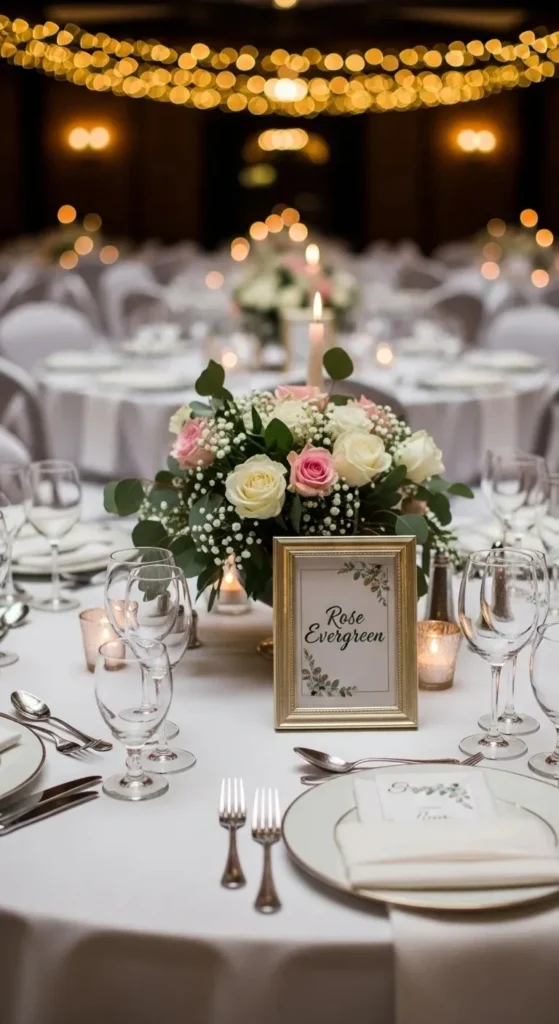
Table names add personality to seating plans.
Instead of Table 1 or Table 2, choose a theme.
Popular ideas include:
- favorite travel destinations
- flowers
- movies
- songs
Each table gets a themed name.
Guests find their table using a matching seating chart.
DIY tip: print small framed cards for each table.
Add a short explanation about why the theme matters to you.
For example, a city where you traveled together.
This makes the seating plan feel more personal.
It also becomes a conversation starter among guests.
Creative table names turn a simple seating layout into part of the wedding story.
Garden Party Outdoor Layout
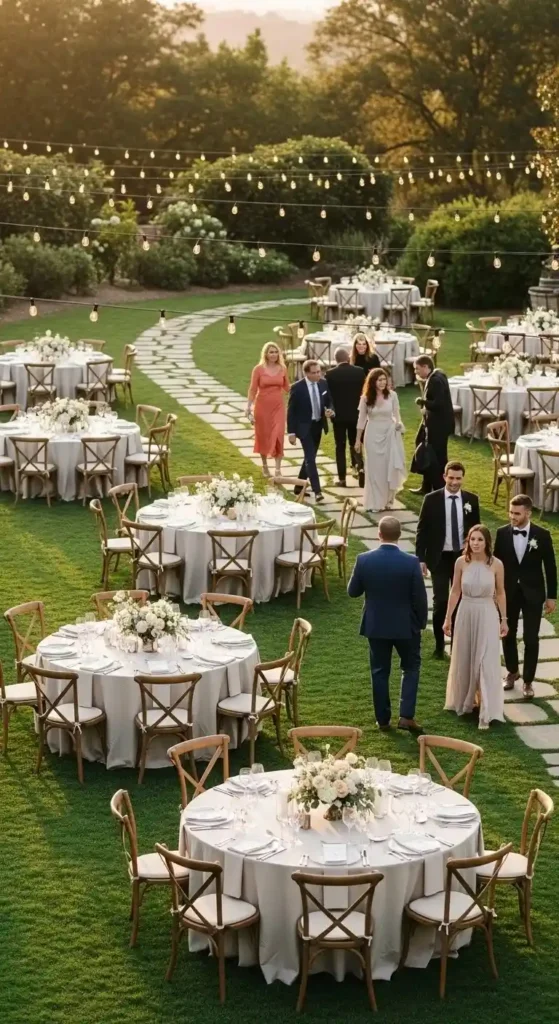
A garden-style layout works beautifully for outdoor weddings. Tables spread across a lawn or courtyard create an open, relaxed atmosphere. Guests enjoy fresh air and natural scenery while dining.
Space the tables evenly so walking paths remain clear. Servers and guests should move easily between tables.
Use simple decorations that match the outdoor setting. Wildflowers, greenery runners, and lanterns look beautiful without costing much.
DIY tip: use wooden crates or baskets as centerpiece bases. Add small jars with flowers or candles inside.
Keep family tables closer to the couple and dance floor. Friends and extended relatives can sit slightly farther away while still enjoying the view.
If the weather is warm, place water stations around the space so guests stay comfortable.
Outdoor layouts feel less formal and often encourage guests to move around, talk, and enjoy the evening together.
This seating style works especially well for spring and summer celebrations.
U-Shaped Reception Table Layout
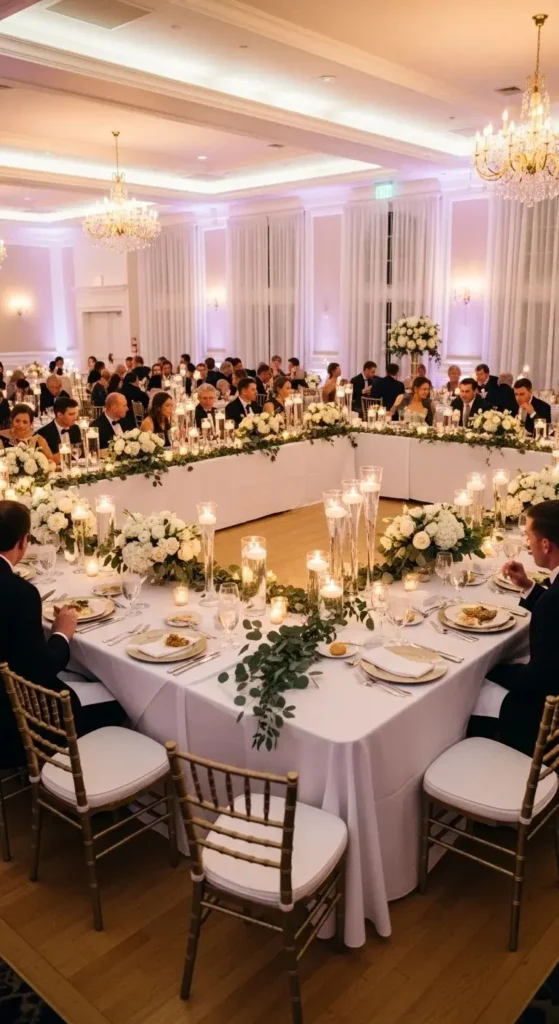
A U-shaped layout creates a shared dining experience. Tables connect in a large open shape while leaving space in the center.
The couple usually sits in the middle of the open section. Guests can easily see them during speeches and dinner.
This arrangement works well for medium-sized weddings where you want guests to feel connected.
Decorating becomes simple because long table runners stretch along the entire setup.
Budget idea: buy inexpensive greenery or artificial vines and lay them along the center.
Add small candles every few feet to create soft lighting.
Guests can talk across the table and still interact with people beside them.
The open center area also works well for speeches or small performances.
A U-shape creates structure without feeling rigid, making it a comfortable layout for social interaction.
Head Table with Wedding Party
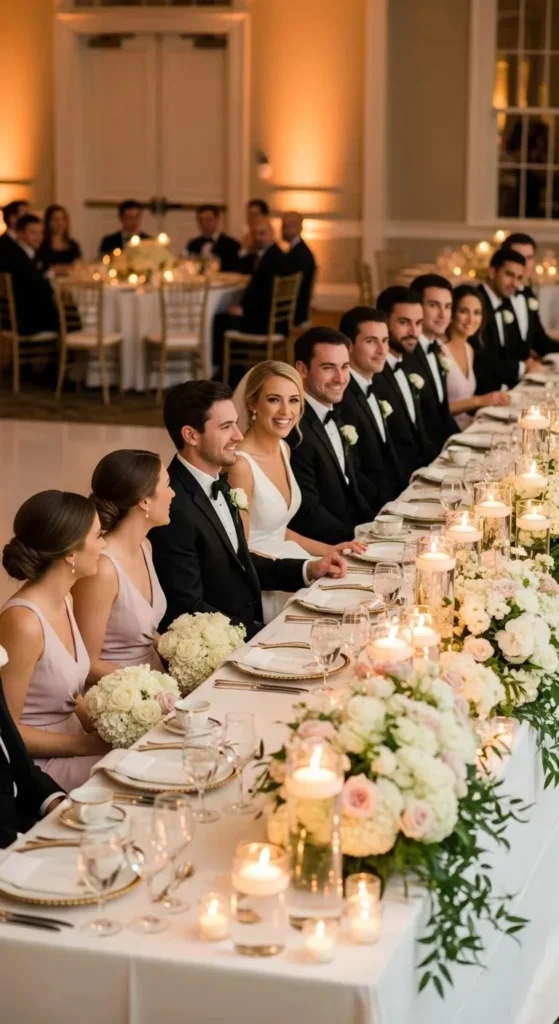
A head table places the couple and wedding party together at the front of the reception.
Guests face the table while eating, which keeps attention on the couple during speeches and special moments.
Traditionally, the couple sits in the center with bridesmaids and groomsmen on each side.
Partners of the wedding party can sit at nearby tables.
Decorating the head table slightly more than the others makes it stand out.
Budget-friendly options include:
- extra greenery along the table edge
- candles in small glass holders
- a fabric runner
Place the head table where it remains visible but does not block movement around the room.
This layout works well for large receptions where guests want to see the wedding party throughout the evening.
It also creates a great photo backdrop during speeches and toasts.
Community Table for Solo Guests
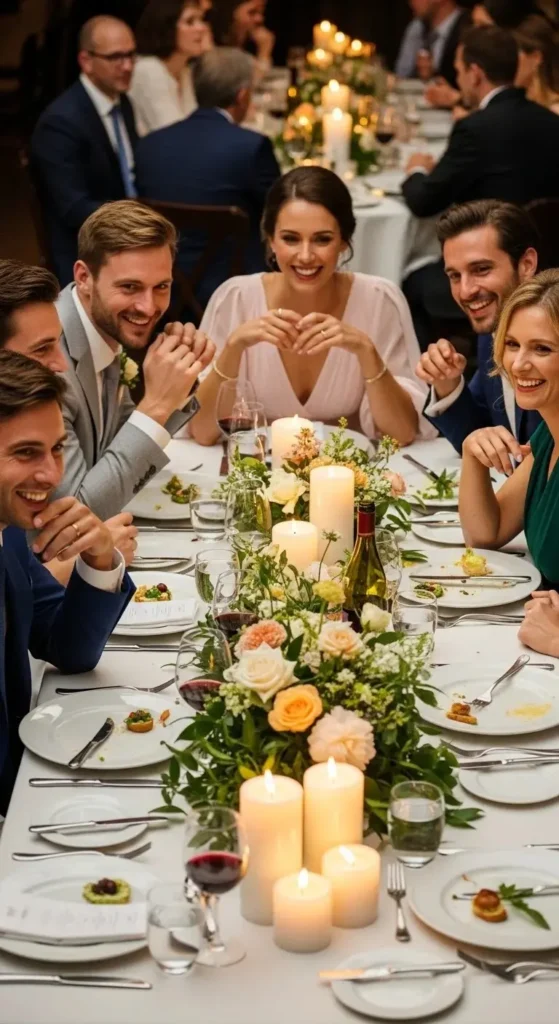
Some guests attend weddings without partners or close friends.
A community table brings these guests together.
Instead of sitting alone at different tables, they share one space designed for friendly conversation.
Choose outgoing guests who enjoy meeting new people. This helps the group feel comfortable quickly.
Place the table in a lively part of the reception space so guests remain part of the celebration.
DIY idea: add small conversation cards on the table.
Questions like:
- favorite vacation memory
- favorite dessert
- favorite movie
These small prompts help break the ice.
Community tables often lead to unexpected friendships during the evening.
Guests appreciate the thoughtful gesture of being placed somewhere welcoming rather than feeling isolated.
Couple’s Story Table Theme
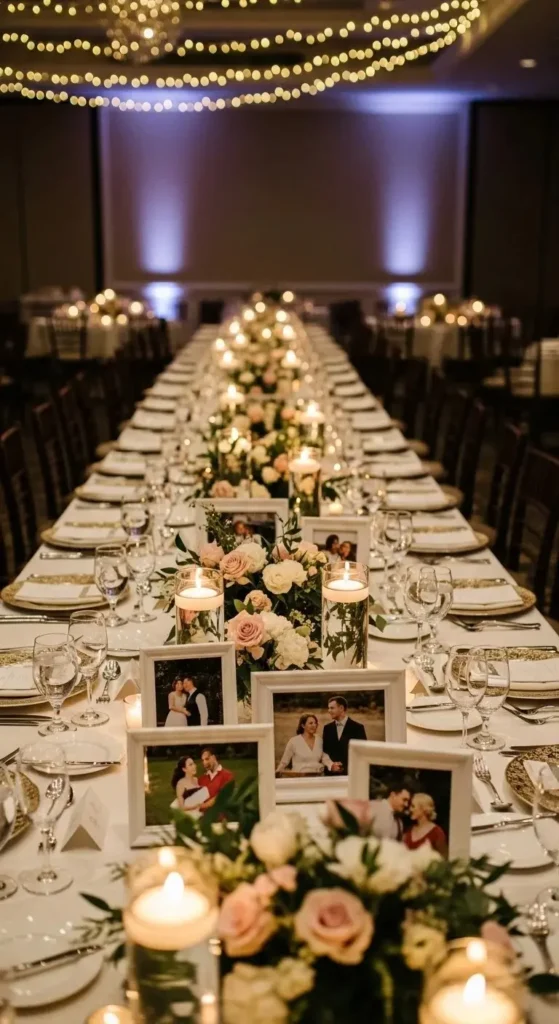
A story-themed seating plan turns tables into chapters of the couple’s journey.
Each table represents a meaningful memory.
Examples include:
- first trip together
- engagement location
- favorite café
- college where you met
Place small photos or notes on the table explaining the memory.
Guests enjoy reading these stories while waiting for dinner.
DIY tip: print photos at home and place them in simple frames from craft stores.
You can also name tables after meaningful dates or cities.
This idea makes seating arrangements feel personal rather than purely functional.
Guests often walk around the room to read different stories.
It becomes part of the entertainment and helps guests learn more about the couple.
Color-Coded Seating Sections
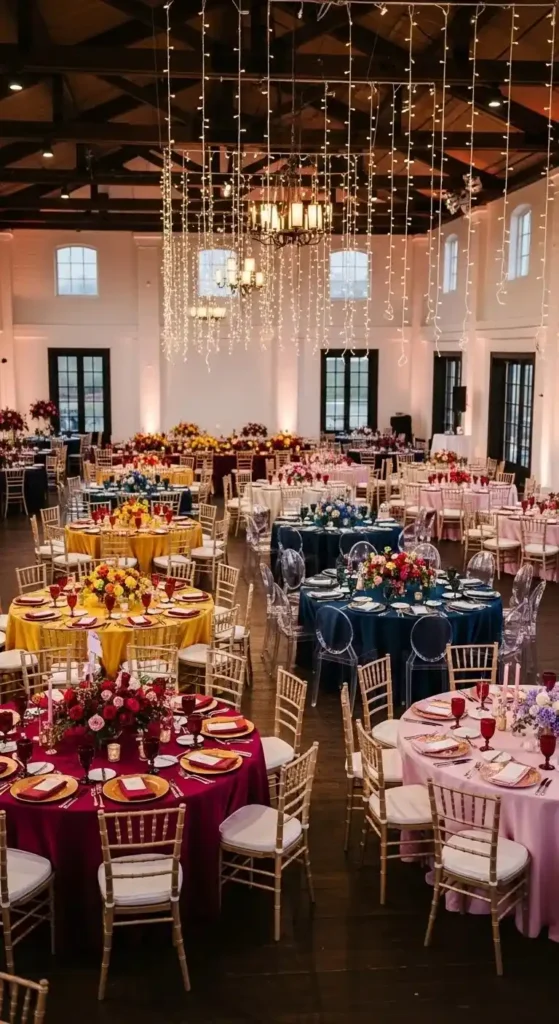
Color coding makes seating easy to understand.
Instead of table numbers, each section uses a color.
For example:
- blue section
- green section
- gold section
Guests find their color on the seating chart and then locate the matching tables.
Decorations can follow the same color theme.
Use colored napkins, ribbons, or small flowers to mark each section.
DIY tip: print escort cards on colored paper that matches the table theme.
This system works especially well for large guest lists where numbers may confuse people.
It also creates a visually pleasing layout across the reception room.
Different colors add energy and help guests quickly recognize their seating area.
Window-Side Tables for Elderly Guests
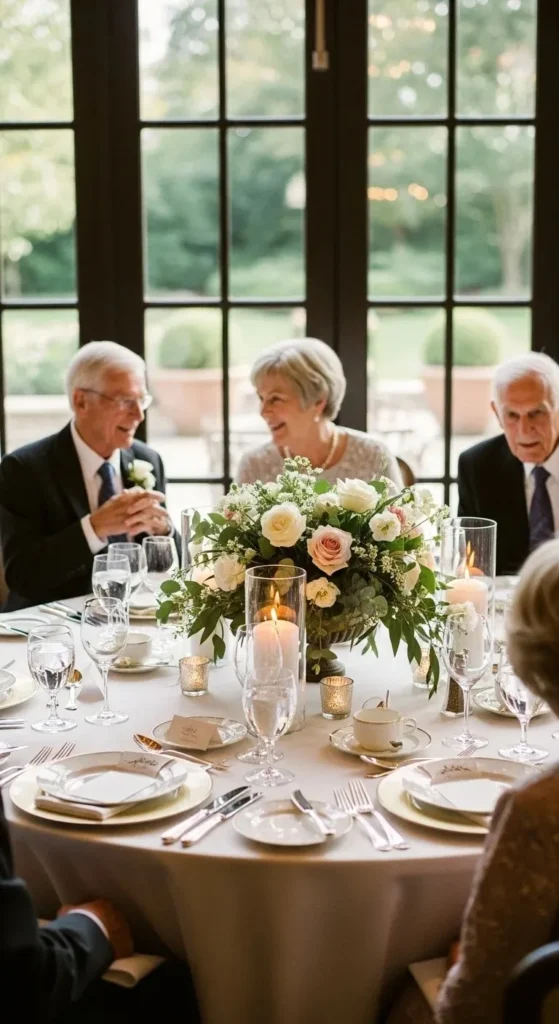
Older guests often prefer quieter areas during receptions.
Placing them near windows or calmer sections of the room helps them relax.
These areas usually have better lighting and less noise from speakers or the dance floor.
Choose comfortable chairs and avoid overcrowding the table.
DIY idea: place small table lamps or extra candles if the space becomes dim later in the evening.
Seat relatives or friendly family members nearby so conversations stay lively.
This thoughtful placement shows care for guests who may need a calmer setting.
They still remain close enough to enjoy speeches and special moments without feeling overwhelmed by loud music.
Cocktail Table Social Areas
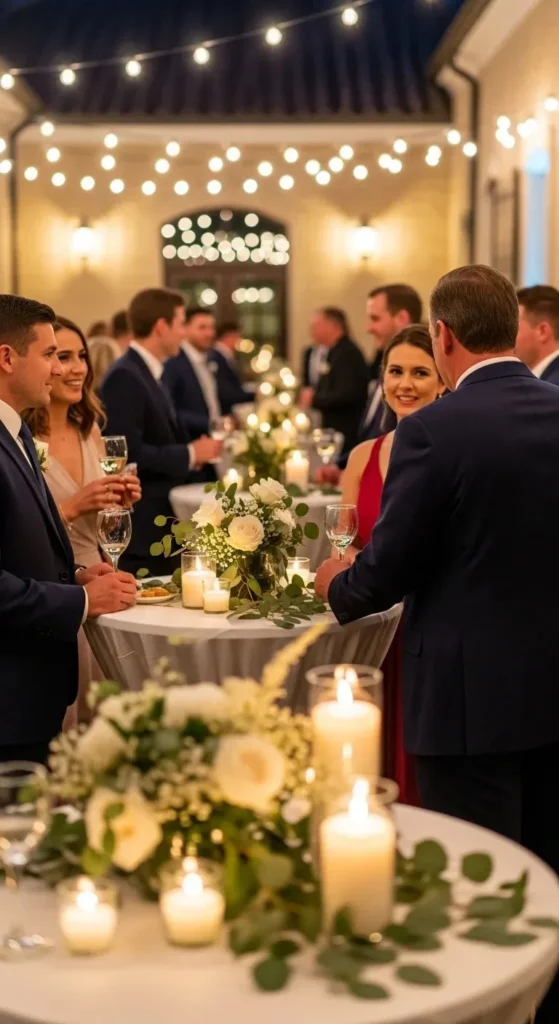
Cocktail tables create flexible seating for guests who prefer standing and mingling.
These tall tables usually hold drinks and small plates.
Place them around the dance floor or bar area.
Guests use them during cocktail hour and between dances.
Decorate them simply with small flowers or candles.
Budget tip: use narrow vases with a single flower stem. It keeps the table stylish without blocking space.
Cocktail tables reduce crowding around the bar and encourage guests to move around.
They work well alongside traditional dining tables.
This mix of seating styles gives guests freedom to socialize throughout the evening.
Dessert Bar Seating Cluster
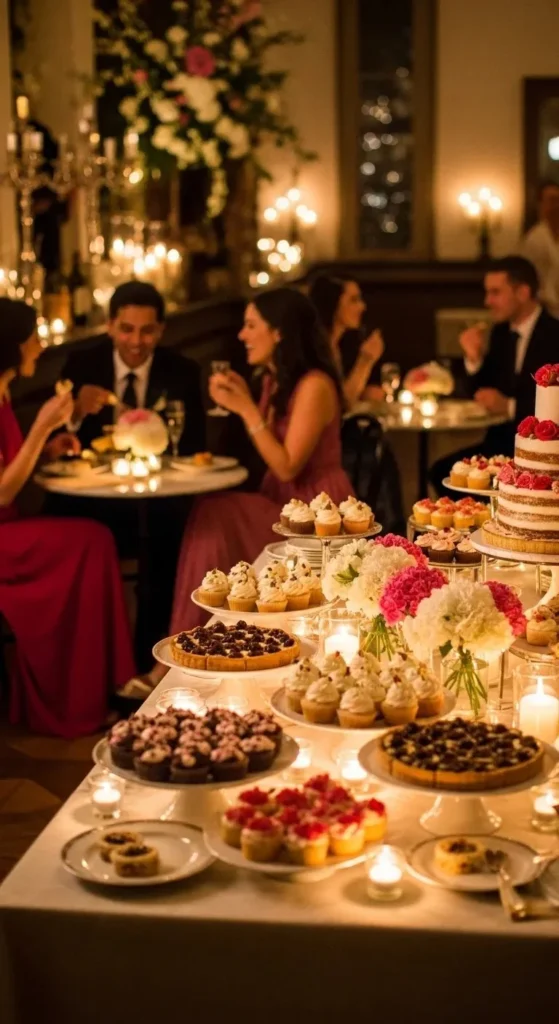
A dessert seating cluster creates a fun late-evening hangout space.
Place a few small tables near the dessert bar.
Guests can sit down while enjoying cake, pastries, or coffee.
Decorate these tables lightly with candles or mini flowers.
DIY idea: use mismatched vintage plates or stands for the dessert display.
Guests often gather here after dinner while chatting casually.
This setup also keeps the main dining tables from feeling crowded late in the night.
Dessert clusters create a relaxed café-style environment inside the reception.
Photo Memory Table Seating
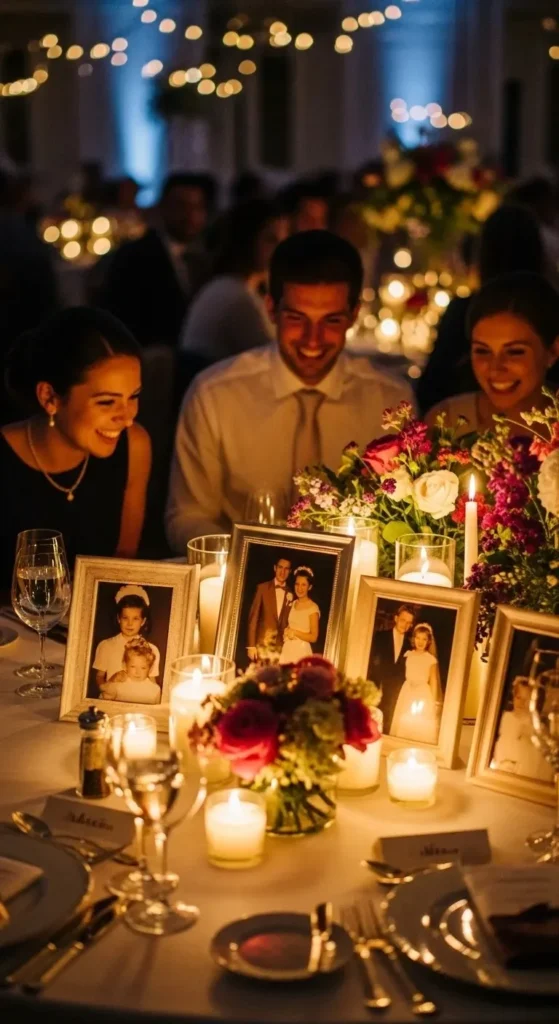
Photo memory tables mix décor with seating arrangements.
Each table includes framed photos of the couple from different life stages.
Examples include:
- childhood pictures
- graduation photos
- early dating memories
Guests often enjoy looking through these images during dinner.
DIY tip: print photos at home and use simple frames from craft stores.
You can also add short captions describing the memory.
These small personal touches make tables feel meaningful.
Guests become part of the couple’s story while sharing a meal.
Interactive Guest Choice Seating
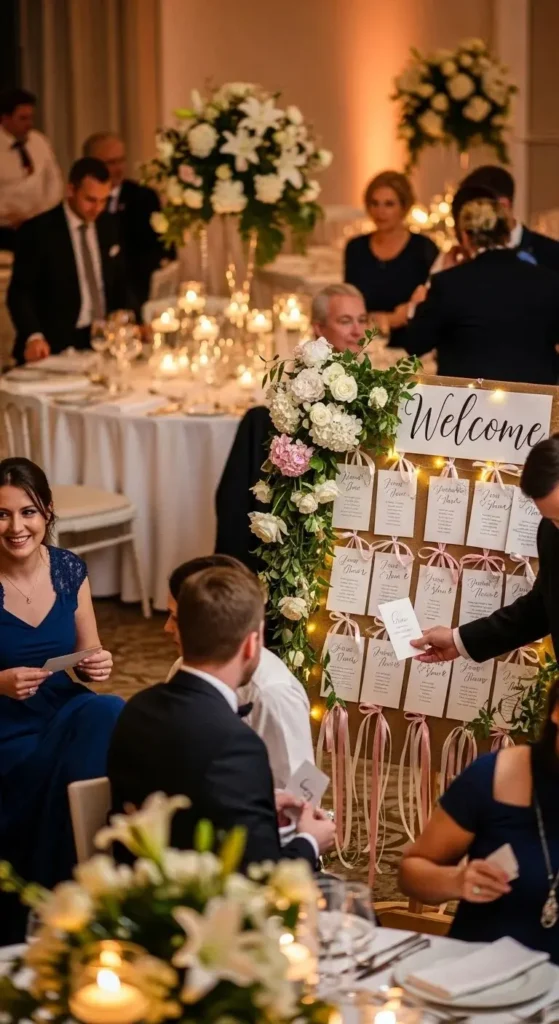
An interactive seating style adds a playful moment when guests arrive.
Instead of assigning exact seats, you assign table zones and let guests choose their seat within that area.
For example, guests may be assigned to:
- Garden tables
- Rose tables
- Sunset tables
When they arrive, they pick a card showing their section and then choose any open chair at those tables.
This idea works well for relaxed weddings where guests enjoy moving around and meeting people.
DIY tip: place seating cards on a decorated board or wooden tray.
Add simple décor like:
- greenery
- candles
- small flowers
Guests enjoy the moment of selecting their seat. It feels casual and welcoming rather than strict.
To keep things organized, make sure each section has enough chairs for the assigned guests.
This style works especially well for outdoor weddings or cocktail-style receptions.
It gives guests a small sense of freedom while still keeping the seating plan organized.
Conclusion
A thoughtful seating plan turns a simple reception into a comfortable gathering where guests feel welcome and included. Round tables encourage conversation, long tables create a shared dining experience, and creative ideas like lounge areas or themed tables add personality.
Simple DIY details—flowers, candles, escort cards, or themed table names—can transform the layout without stretching the budget.
Start planning early and think about how guests know each other. When people sit with friendly company and can move around easily, the entire reception feels relaxed.
A well-planned seating arrangement allows everyone to focus on what truly matters: celebrating the couple and enjoying the evening together.