
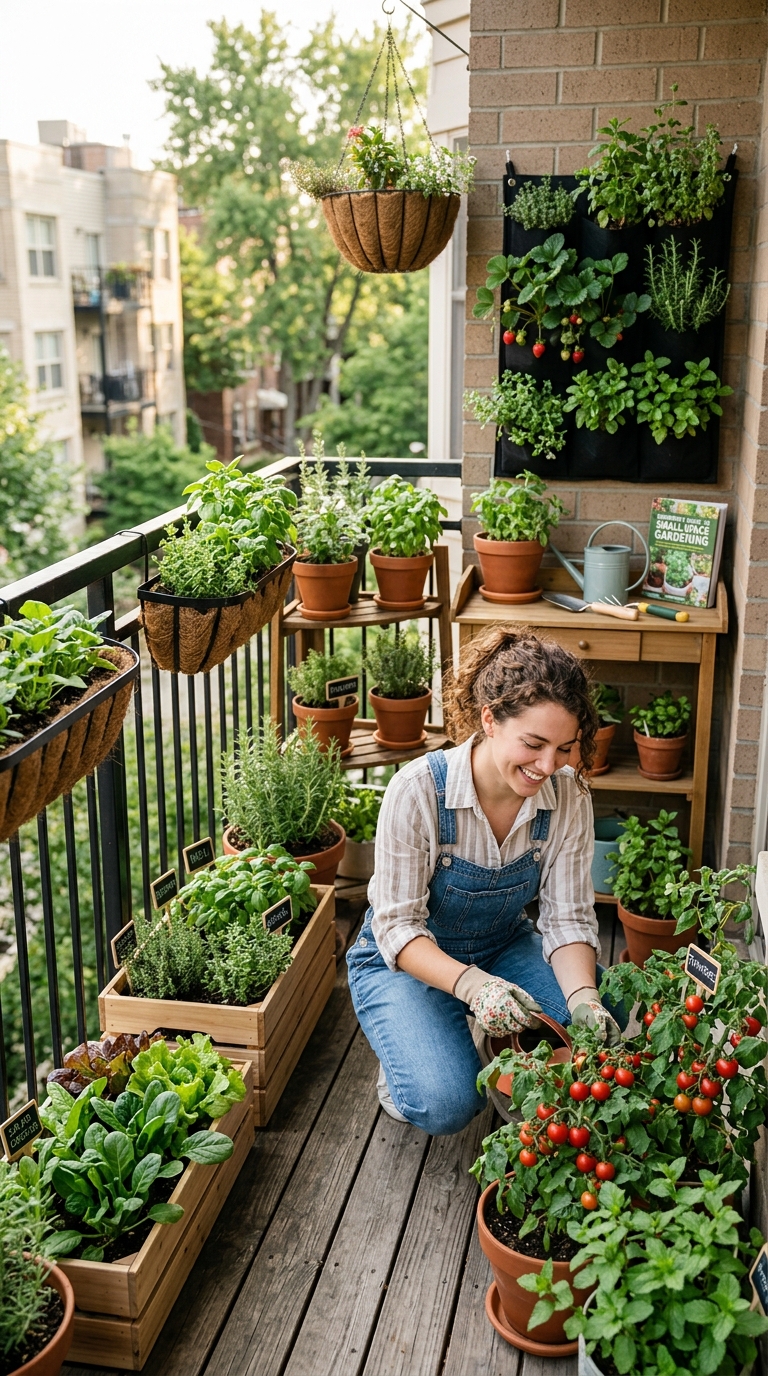
If you think you need a big backyard, farmland, or fancy gardening setup to grow your own food… think again.
The truth is:
👉 You can grow a surprising amount of food in a very small space.
Balconies, tiny patios, apartment corners, window sills, and small backyards can all become productive mini gardens with the right approach.
This guide will walk you through exactly how to grow your own food in small spaces—even if you’ve never planted anything before.
No confusion. No overwhelm. Just simple, practical steps.
Why Growing Your Own Food in Small Spaces Is Worth It
Before we get into the “how,” let’s talk about why this matters.
1. You Save Money
Fresh herbs, vegetables, and greens can be expensive at the store. Growing them at home cuts your grocery bill.
2. Better Taste
Homegrown food is often fresher, richer, and more flavorful.
3. Healthier Lifestyle
You control:
- No pesticides
- No chemicals
- No long storage time
4. Stress Relief
Gardening is surprisingly calming and helps reduce daily stress.
5. Even Tiny Spaces Can Produce Food
You don’t need land—just sunlight and a few containers.
Step 1: Understand Your Space (This Is Where Beginners Go Wrong)
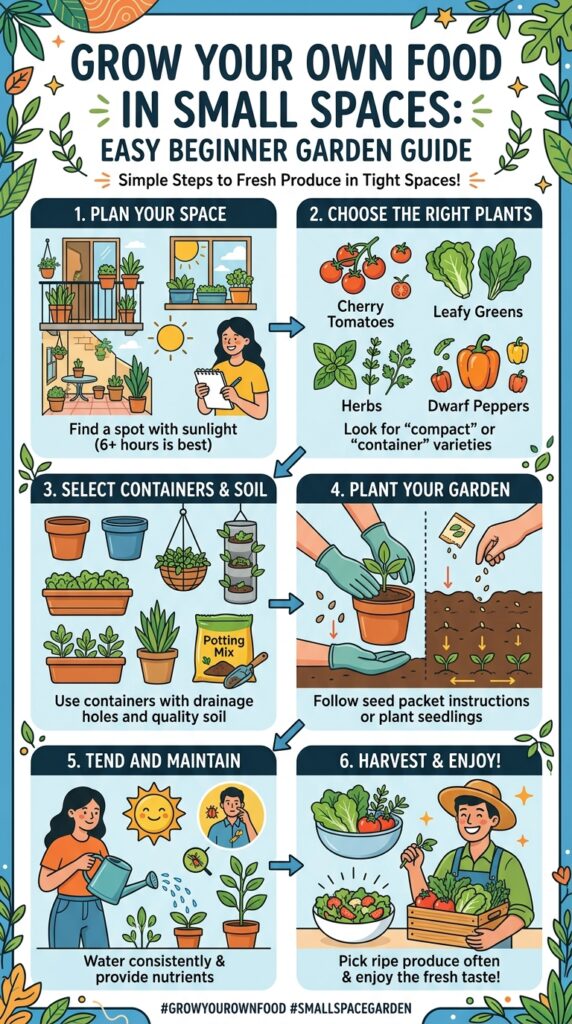
Before planting anything, observe your space carefully.
Ask yourself:
- How many hours of sunlight does it get?
- Is it balcony, window, rooftop, or backyard?
- Is it windy or sheltered?
- Do I have easy access to water?
Light Levels Matter Most
- Full sun (6–8 hours): Best for vegetables
- Partial sun (3–5 hours): Herbs and leafy greens
- Low light: Limited options, mostly herbs
Pro Tip:
Most beginner gardens fail because plants are placed in the wrong light conditions—not because of lack of effort.
Step 2: Start With the Easiest Foods to Grow
Don’t start with complicated crops.
Start with plants that practically grow themselves.
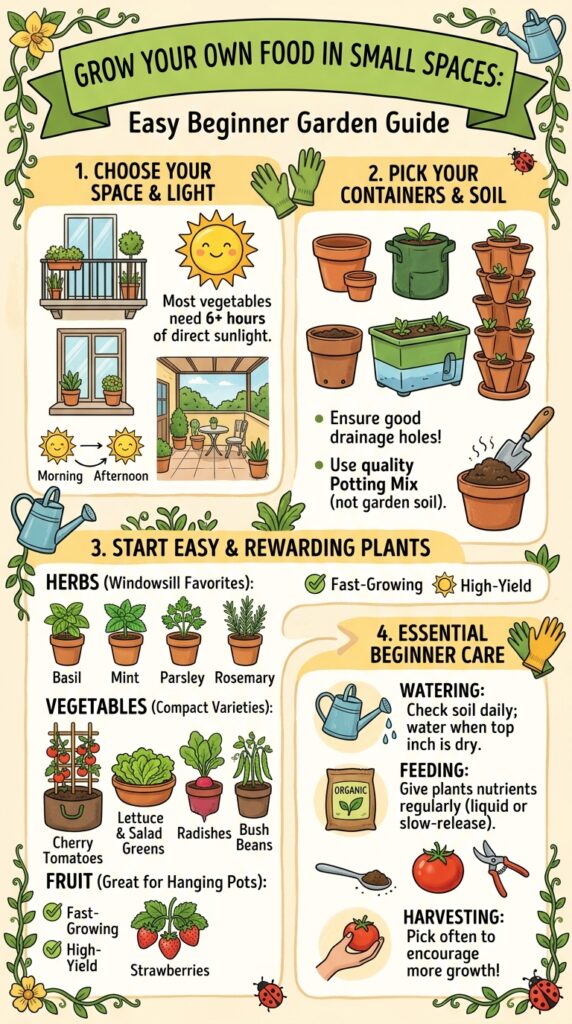
Best Beginner-Friendly Foods
- Lettuce
- Spinach
- Green onions
- Tomatoes (cherry varieties)
- Cucumbers (dwarf types)
- Peppers
- Basil
- Mint
These are forgiving, fast-growing, and perfect for small spaces.
Step 3: Choose the Right Containers (No Fancy Pots Needed)
You don’t need expensive planters.
What Works Great:
- Plastic buckets
- Old containers
- Grow bags
- Recycled bottles (for herbs)
- Wooden crates
Important Rule:
👉 Always ensure drainage holes.
Without drainage, roots rot—and plants die.
Step 4: Use Good Soil (This Is Your Foundation)
Soil is not just “dirt”—it’s your plant’s home.
Best Option:
Use a potting mix (light, airy, and designed for containers).
Simple Soil Mix Recipe:
- Potting soil
- Compost
- A little perlite or sand (for drainage)
Why It Matters:
Healthy soil = healthy food = strong growth.
Step 5: Start Small (Seriously, Don’t Overdo It)
One of the biggest beginner mistakes is trying to grow too many things at once.
Better Approach:
Start with:
- 2–3 herbs
- 2–3 vegetables
Learn how they behave before expanding.
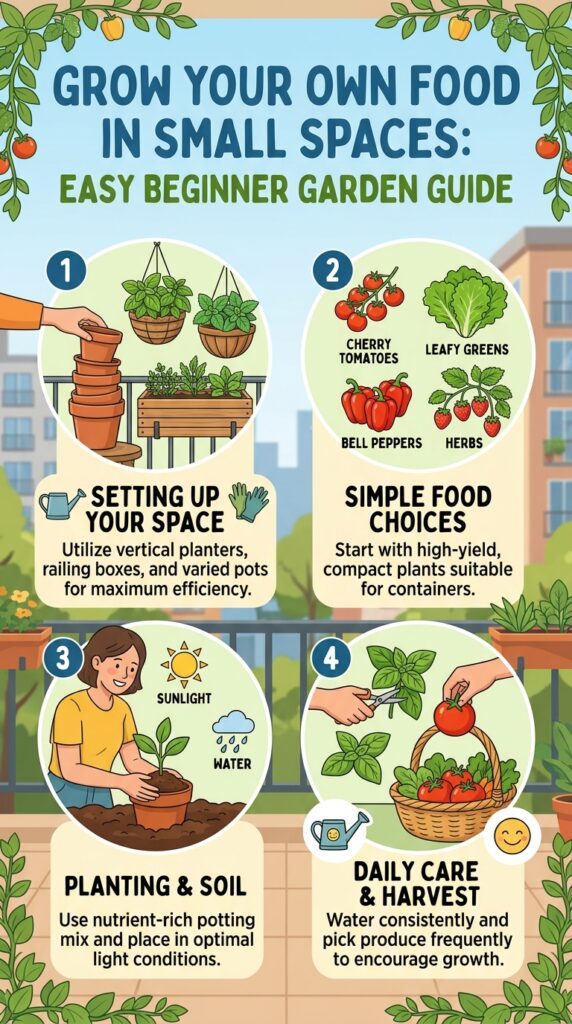
Step 6: Watering Basics (Keep It Simple)
Watering doesn’t need to be complicated.
Rule of Thumb:
- Check soil with your finger
- If it’s dry 1–2 inches down → water it
Avoid:
- Daily watering without checking
- Leaving soil constantly soggy
Best Time to Water:
- Early morning
- Or evening (if needed)
Step 7: Maximize Vertical Space (Game-Changer for Small Areas)
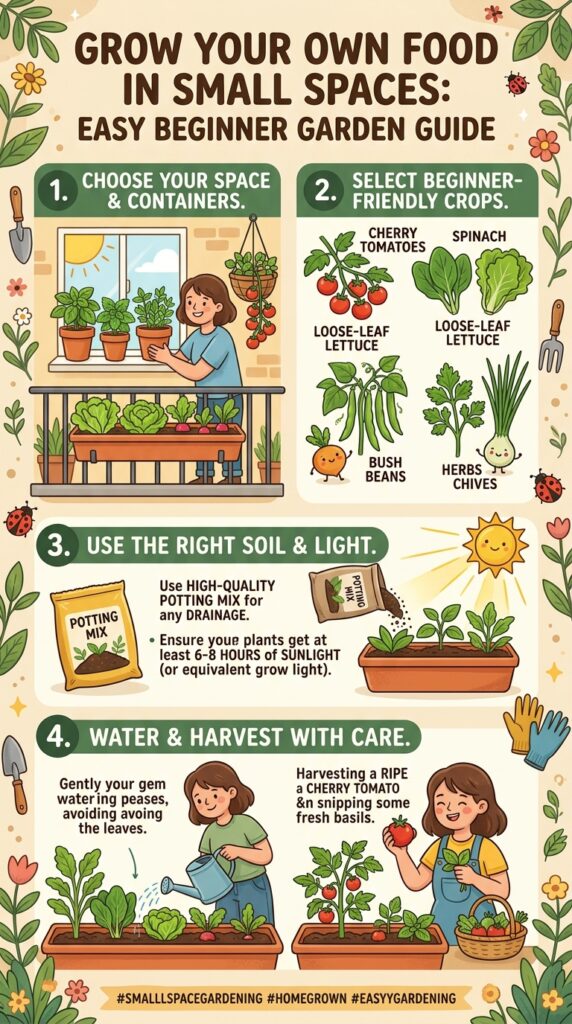
If your space is small, think upward—not outward.
Vertical Gardening Ideas:
- Hanging pots
- Wall planters
- Shelves for plants
- Stackable containers
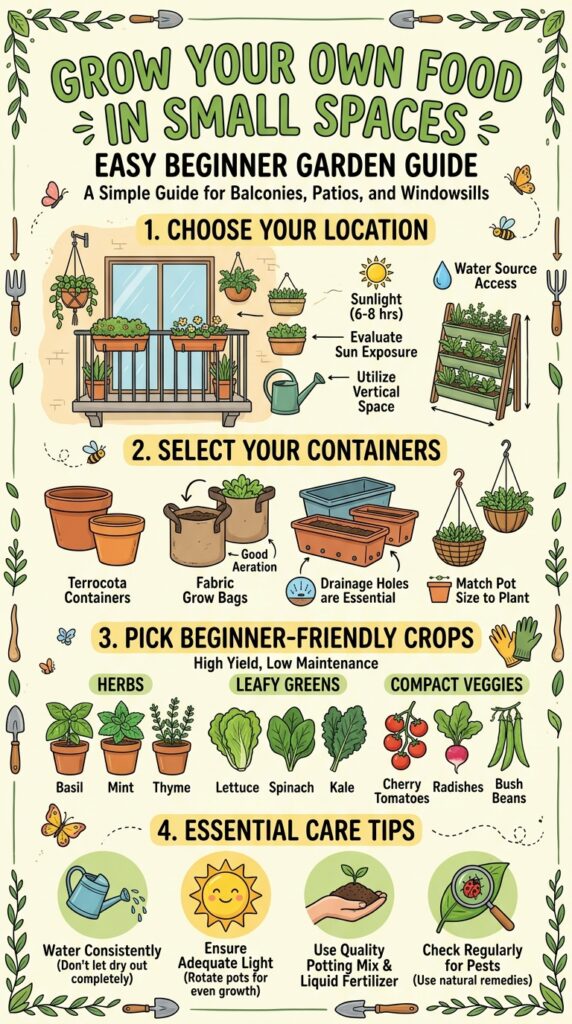
Why It Works:
You multiply growing space without needing more floor area.
Step 8: Grow Herbs for Fast Wins
Herbs are the easiest way to feel successful quickly.
Best Herbs to Start With:
- Basil
- Mint
- Cilantro
- Parsley
Benefits:
- Grow fast
- Easy to maintain
- Used daily in cooking
Even a small balcony can produce enough herbs for your kitchen.
Step 9: Add Vegetables Slowly (Once You Build Confidence)
After herbs, move to vegetables.
Beginner Vegetables:
- Cherry tomatoes
- Green beans
- Peppers
- Radishes
These are compact and productive.
Step 10: Sunlight Strategy (Make or Break Factor)
Plants are basically solar-powered.
Tips:
- Place sun-loving plants where they get max light
- Rotate pots weekly if needed
- Don’t block light with taller plants
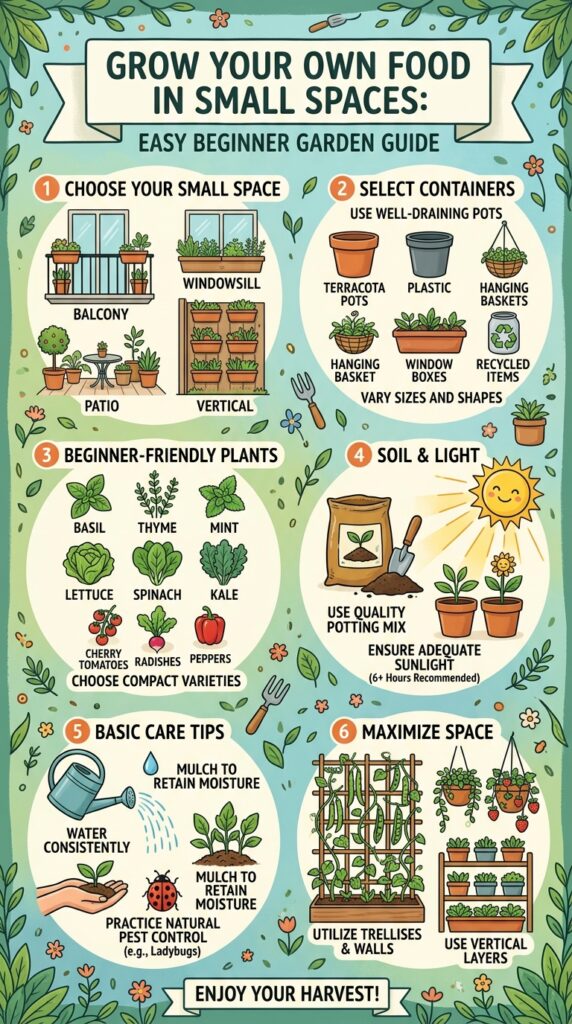
Step 11: Feeding Your Plants (Simple Fertilizing)
Plants need nutrients to grow food.
Easy Options:
- Compost
- Organic liquid fertilizer
- Kitchen scraps (carefully composted)
Don’t Overdo It:
Too much fertilizer can damage plants.
Step 12: Pest Control (Keep It Natural)
Small gardens still get pests—but you can manage them easily.
Common Issues:
- Aphids
- Tiny insects on leaves
Natural Solutions:
- Neem oil spray
- Soap-water spray
- Hand removal for small infestations
Step 13: Harvesting the Right Way
Harvesting correctly helps plants grow more.
Tips:
- Pick leaves regularly (don’t wait too long)
- Harvest outer leaves first
- Don’t remove the entire plant unless needed
Example:
👉 Basil grows more when you trim it often.
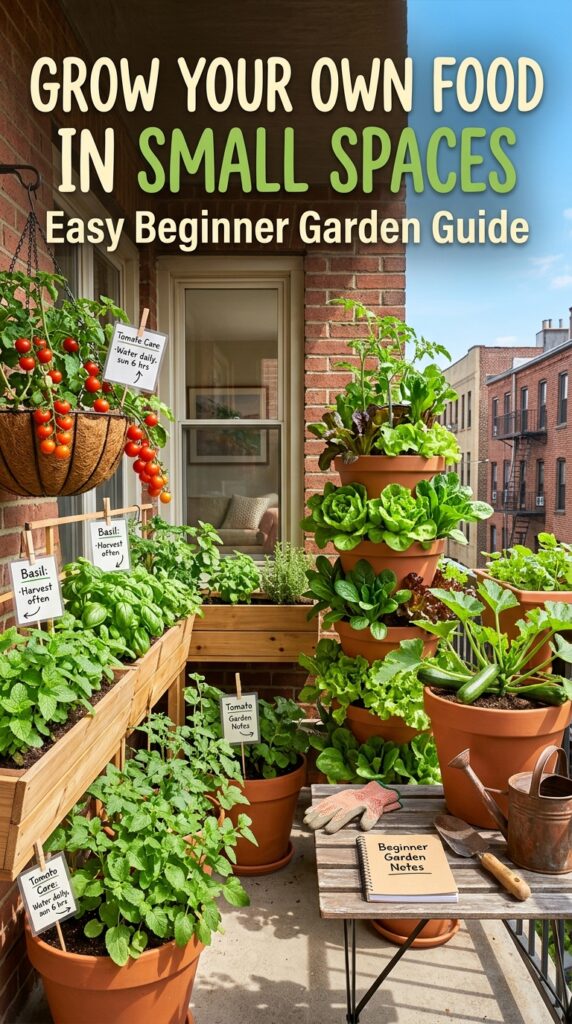
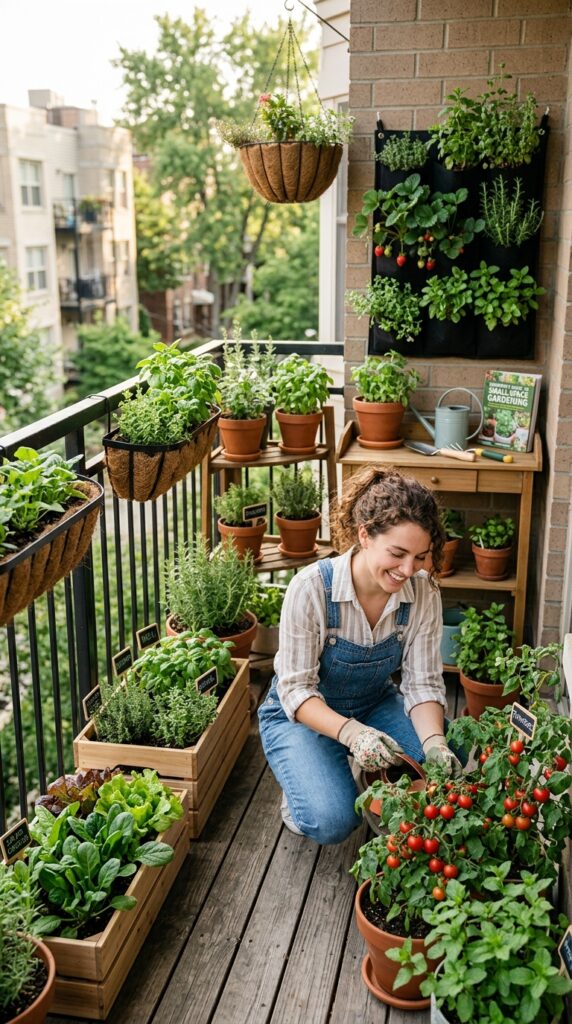
Step 14: Small Space Layout Example
Here’s a simple setup:
- Balcony corner: tomato plant
- Railings: hanging herbs
- Floor: leafy greens in containers
- Wall: vertical herb garden
Even a 4×6 ft space can become productive.
Common Beginner Mistakes (Avoid These)
1. Overcrowding plants
2. Ignoring sunlight
3. Using poor soil
4. Overwatering
5. Expecting instant results
Gardening rewards patience—not perfection.
Realistic Expectations: What You Can Grow
In a small space, you can realistically grow:
- Fresh herbs daily
- Salad greens weekly
- Small vegetables seasonally
It won’t replace your entire grocery store—but it WILL make a difference.
Why Small-Space Gardening Feels So Rewarding
There’s something powerful about:
- Picking your own basil for dinner
- Harvesting tomatoes from your balcony
- Watching food grow from a tiny seed
It connects you to something real in a very digital world.
And once you start… it becomes addictive in the best way.
Final Thoughts: Start Small, Grow Big
You don’t need land.
You don’t need experience.
You just need:
- A little sunlight
- A few containers
- Basic soil
- And consistency
That’s it.
Start with one pot today—and in a few weeks, you’ll be surprised how much food you can actually grow in a small space.