
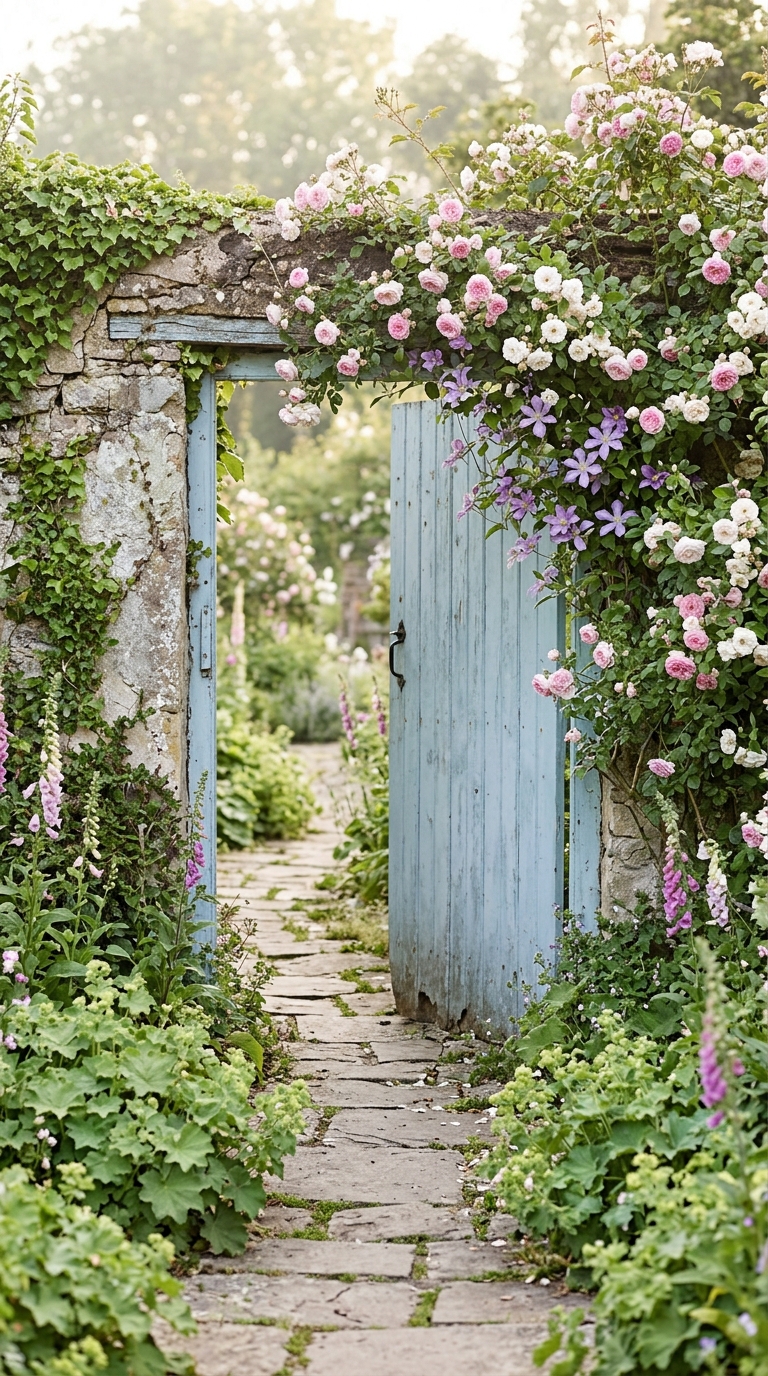
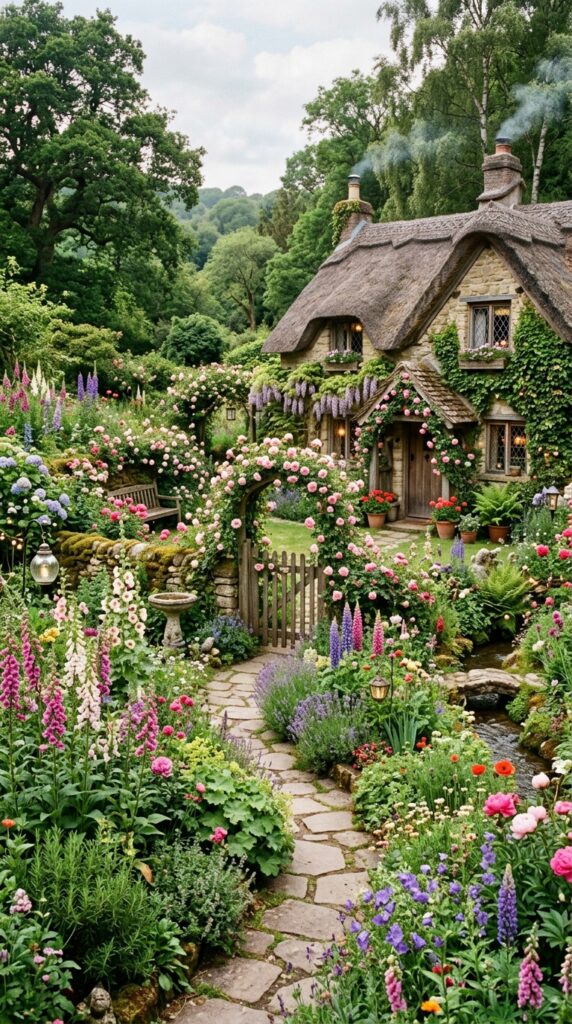
There’s something undeniably magical about a cottage garden. It doesn’t feel overly designed or rigid — instead, it feels like nature itself gently took over and created something soft, romantic, and almost storybook-like.
Think winding paths covered in flowers, overflowing greenery, pastel blooms, rustic fences, and that effortless charm you usually only see in old European villages or fairytale illustrations.
The best part? You don’t need a countryside estate or a huge budget to create this look. With the right plants, layout, and styling choices, you can turn even a small backyard into a dreamy cottage-style escape.
In this guide, we’ll break down everything step by step so you can design a cottage garden that feels like it belongs in a fairytale.
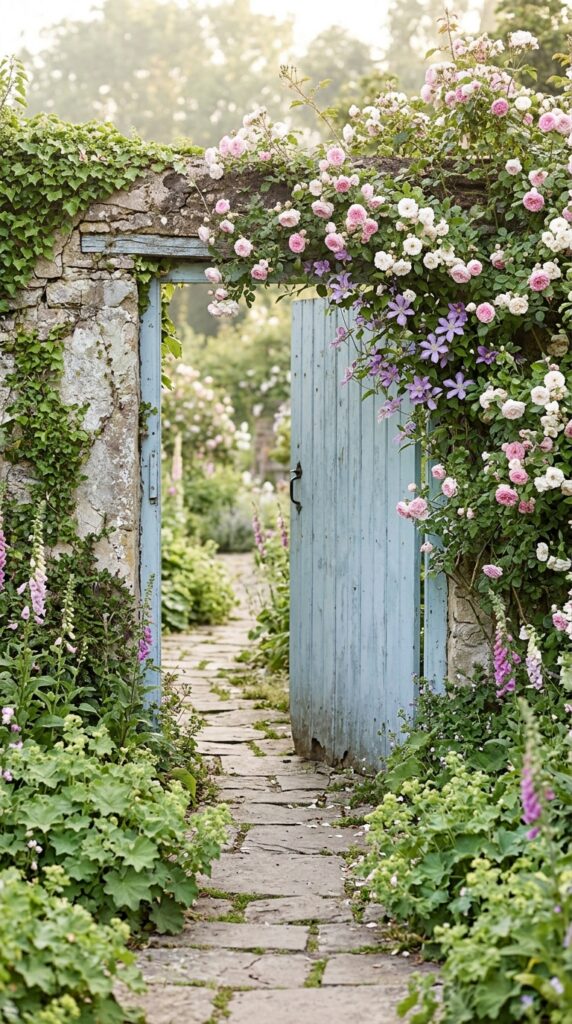
Step 1: Understand the Cottage Garden Philosophy
Before anything else, you need to understand what makes a cottage garden different.
It’s not about perfection. It’s about controlled chaos.
Key Characteristics:
- Dense, layered planting
- Flowers growing close together
- Soft, romantic color palettes
- Natural, slightly wild appearance
- Mix of flowers, herbs, and shrubs
Unlike modern minimalist gardens, cottage gardens feel abundant, lived-in, and overflowing with life.
Step 2: Choose a Soft, Romantic Color Palette
Color is everything in a fairytale-style garden.
Popular Cottage Garden Colors:
- Soft pinks
- Lavender and lilac tones
- Cream and white blooms
- Pale yellows
- Light blues
Pro Tip:
Avoid overly harsh neon or artificial-looking colors. The goal is softness and harmony, not contrast.
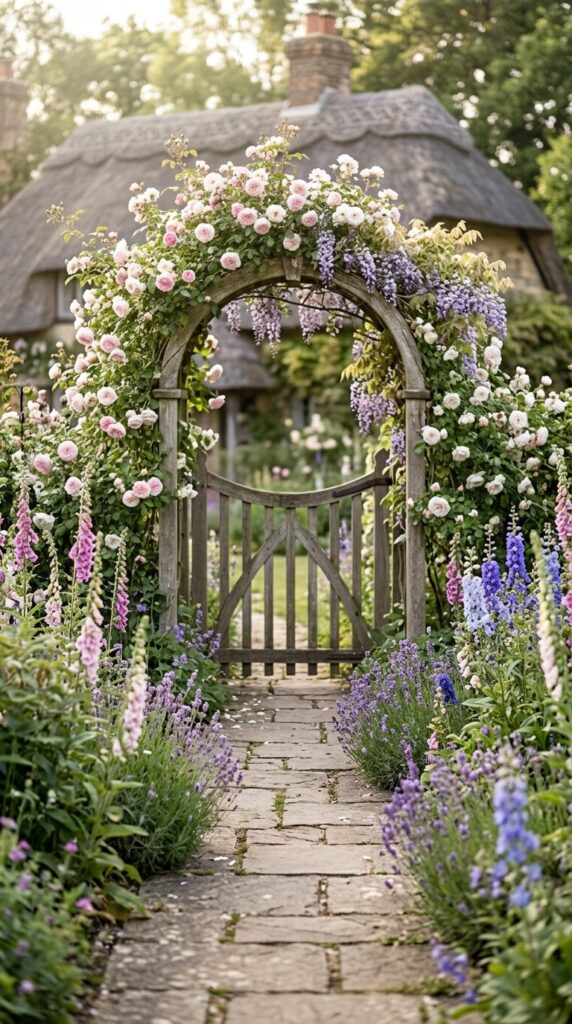
Step 3: Start With Layered Planting Design
A true cottage garden is built in layers.
Layer Structure:
- Tall plants (back layer)
- Medium flowering plants (middle layer)
- Low ground cover (front layer)
This creates depth and that “overflowing” effect.
Example Combination:
- Roses (tall focal plants)
- Lavender (mid layer)
- Creeping thyme (ground cover)
Step 4: Must-Have Cottage Garden Flowers
To get that authentic fairytale look, you need the right plants.
Classic Choices:
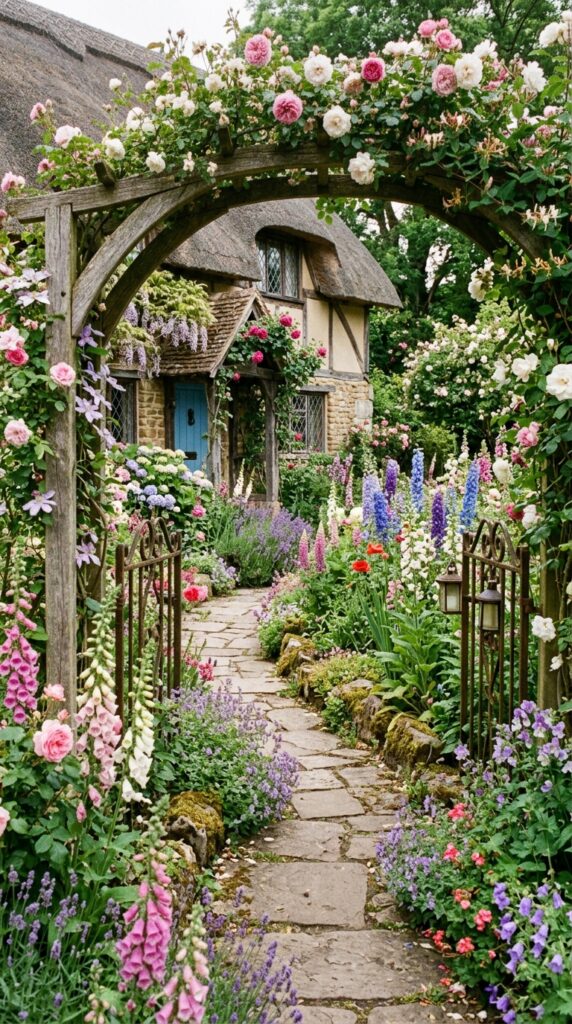
- Roses (especially climbing roses)
- Peonies
- Lavender
- Foxglove
- Delphiniums
- Hydrangeas
- Daisies
These flowers naturally create that soft, romantic aesthetic people associate with old English gardens.
Step 5: Add Climbing Plants for Vertical Magic
Nothing says fairytale like flowers climbing walls, fences, or arches.
Best Climbing Plants:
- Climbing roses
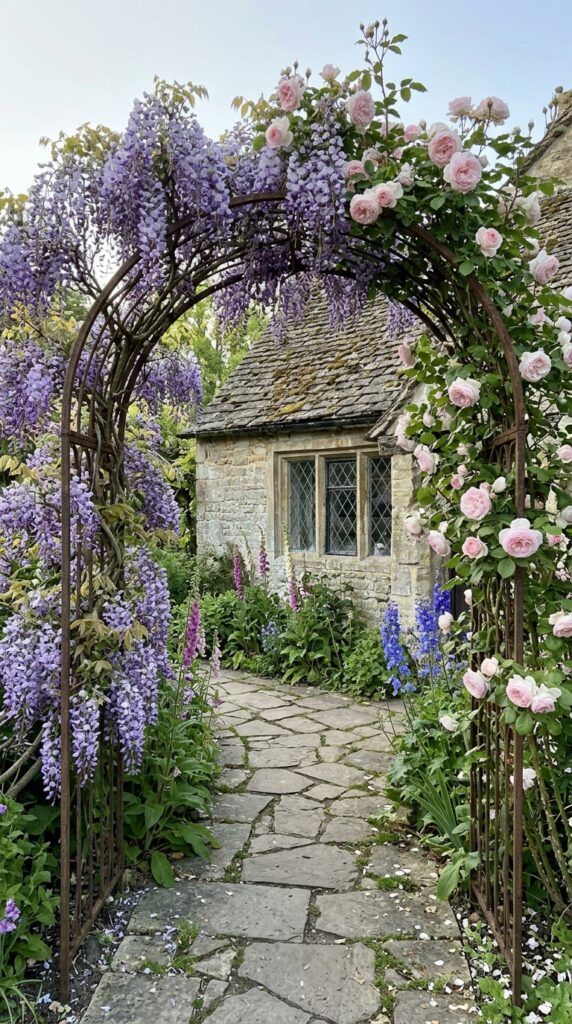
- Wisteria
- Clematis
- Honeysuckle
Where to Use Them:
- Garden arches
- Pergolas
- Fence lines
- House walls
This vertical layering instantly makes your garden feel enchanted.
Step 6: Create Winding Garden Paths
Straight lines feel modern. Cottage gardens prefer curves.
Path Ideas:
- Gravel pathways
- Stone stepping paths
- Brick walkways with moss
Design Tip:
Make your paths gently curved instead of straight. It creates mystery and charm, like something you’d discover in a storybook.
Step 7: Mix Flowers With Herbs
Traditional cottage gardens weren’t just decorative — they were practical.
Herbs to Include:
- Rosemary
- Thyme
- Sage
- Mint
- Chamomile
Not only do they smell amazing, but they also blend beautifully with flowers.
Step 8: Add Rustic Garden Structures
Structures bring character to your garden.
Ideas:
- Wooden fences
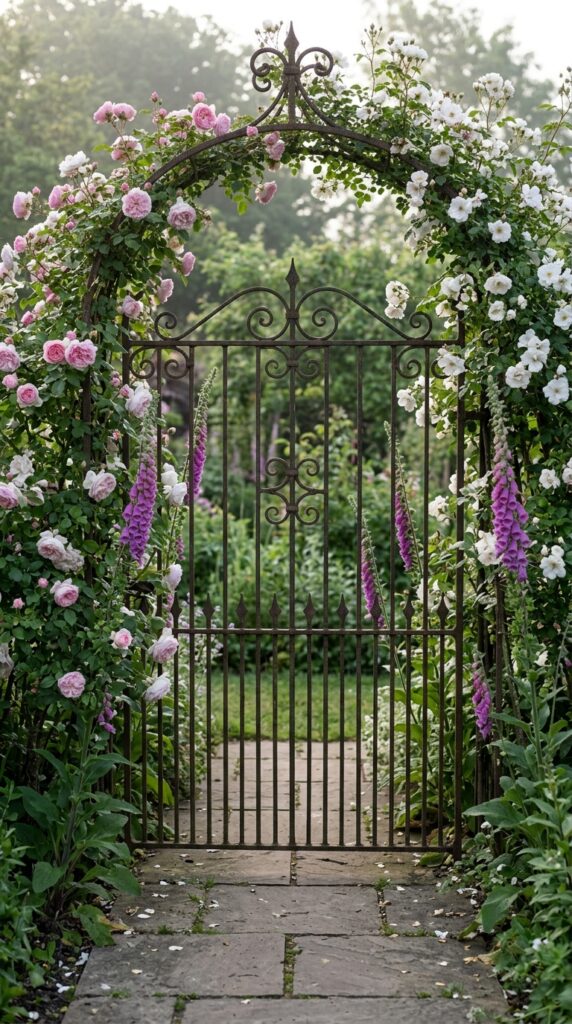
- Vintage-style gates
- Trellises
- Arches covered in vines
- Rustic benches
Pro Tip:
Avoid modern plastic materials. Stick to wood, iron, or aged stone finishes.
Step 9: Let Things Grow a Little Wild
Perfection is not the goal here.
In fact, a slightly messy, overflowing garden is exactly what you want.
Let Plants:
- Spill onto pathways
- Grow close together
- Overlap naturally
This creates the authentic “untamed fairytale” feeling.
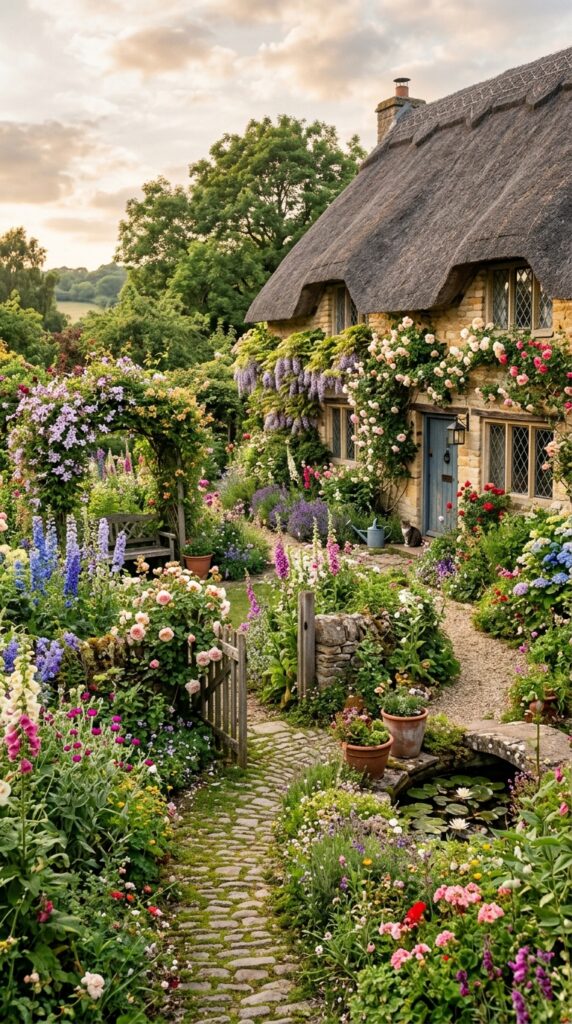
Step 10: Add a Focal Point
Even wild gardens need structure.
Focal Point Ideas:
- Birdbath
- Stone fountain
- Rustic bench under a tree
- Floral archway
This gives the eye a place to rest and makes the space feel designed, not random.
Step 11: Incorporate Garden Decor (But Keep It Subtle)
Too much decor can ruin the natural feel.
Gentle Decor Ideas:
- Vintage lanterns
- Ceramic pots
- Hanging baskets
- Antique watering cans
The goal is charm, not clutter.
Step 12: Use Natural Materials Everywhere
Material choice plays a huge role in the aesthetic.
Stick To:
- Wood
- Stone
- Clay
- Wrought iron
Avoid shiny or synthetic finishes — they break the illusion.
Step 13: Add Seating in Hidden Corners
A fairytale garden always feels like it has secret spots.
Seating Ideas:
- Small wooden benches
- Stone seating under trees
- Hidden corner chairs surrounded by flowers
These spaces make your garden feel personal and peaceful.
Step 14: Attract Wildlife for Natural Beauty
Cottage gardens feel alive because they attract nature.
Encourage:
- Bees
- Butterflies
- Birds
How:
- Plant nectar-rich flowers
- Add bird feeders
- Include water sources
This brings movement and life into your garden.
Step 15: Focus on Seasonal Blooming
A great cottage garden changes throughout the year.
Plan for:
- Spring blooms (tulips, daffodils)
- Summer fullness (roses, lavender)
- Autumn tones (dahlias, asters)
This ensures your garden always feels alive and evolving.
Step 16: Lighting for Fairytale Evenings
At night, your garden should feel magical.
Lighting Ideas:
- Soft string lights
- Lanterns along paths
- Solar fairy lights in bushes
Keep lighting warm and subtle — not harsh or bright.
Step 17: Small Garden? No Problem
Even tiny spaces can become cottage-style gardens.
Use:
- Vertical planting
- Hanging pots
- Compact flower beds
- Wall climbers
It’s about density, not size.
Common Mistakes to Avoid
- Using too many modern materials
- Over-pruning plants
- Creating straight, rigid layouts
- Choosing too many bold colors
- Leaving empty, bare spaces
Remember: cottage gardens thrive on abundance.
Budget Guide
You don’t need a huge budget to create this look.
Budget Levels:
- $100–$300: Basic plants + DIY garden bed
- $300–$800: Structures + mixed planting
- $800+: Full transformation with arches and pathways
DIY is your best friend here.
Final Thoughts
A cottage garden is not about control — it’s about harmony between nature and design.
It’s where structure meets wild beauty, and where every corner feels like it belongs in a fairytale.
Start small. Add layers slowly. Let your garden grow into itself.
And over time, you won’t just have a garden — you’ll have a living, breathing storybook right outside your door.